
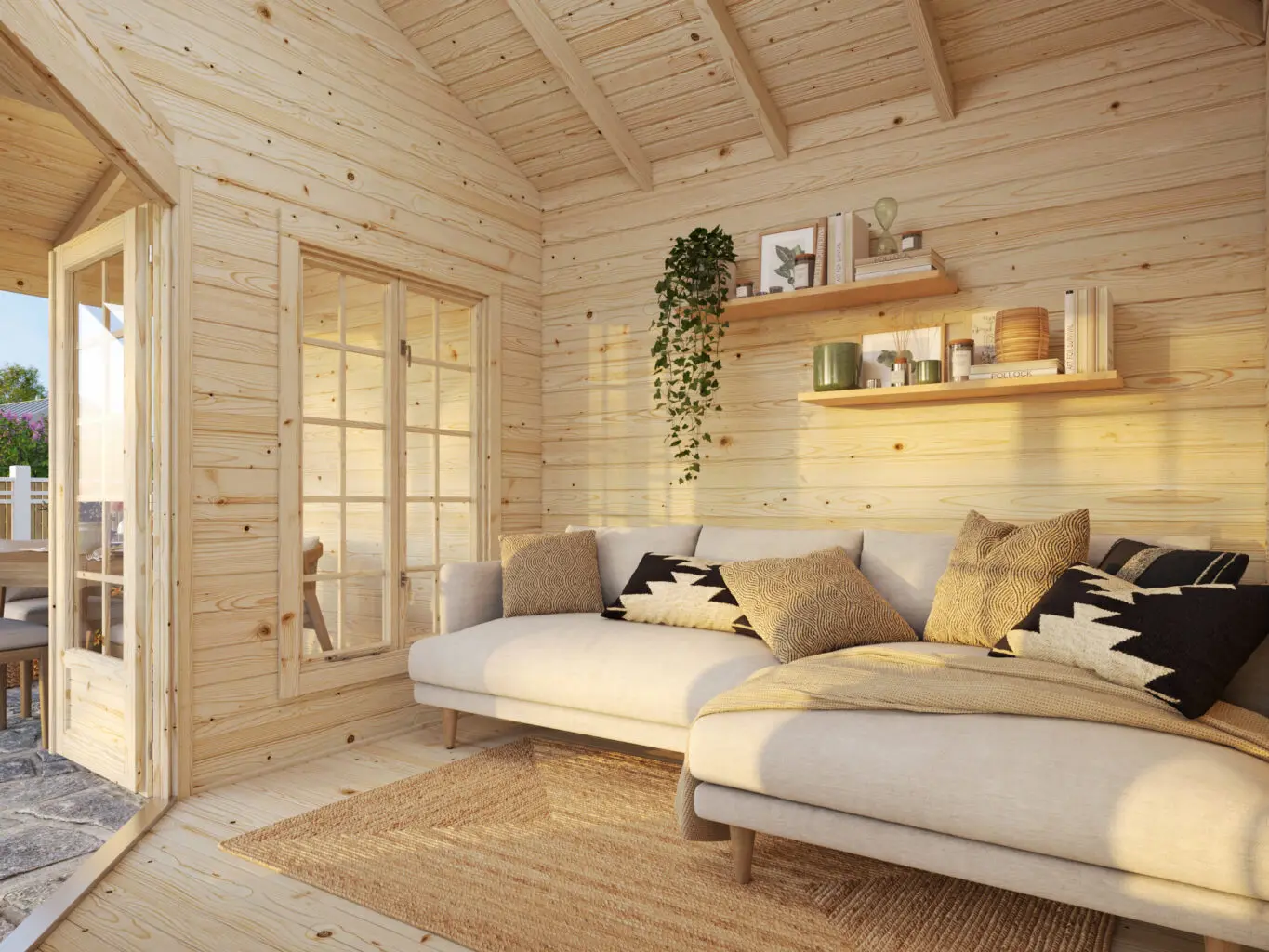
There is something inherently romantic about the idea of living in a log cabin. Picture waking up to the mist rolling over British countryside, sipping coffee by a crackling wood burner while the rain taps gently against the timber.
With the cost of living rising and the tiny home/off-grid movement gaining serious traction, more and more Brits are looking at log cabins not just as weekend holiday lets, but as permanent, year-round residences.
So, can you actually live in a log cabin year-round in the UK?
The short answer is yes. The longer, more realistic answer is: Yes, but you have to build it right, insulate it properly, and navigate the UK’s notoriously strict planning laws.
Here is everything you need to know if you’re dreaming of swapping brick and mortar for round logs and timber beams.
The UK Climate vs. Log Cabins
When people think of log cabins, they usually picture deep Canadian snow or Scandinavian winters. Because of this, many assume UK weather—which is famously damp, windy, and rarely freezing for long stretches—would be a walk in the park for a timber building.
In reality, the UK’s main weather challenge isn’t the cold; it’s the moisture.
British winters are wet and humid, which can be brutal on untreated wood. To live in a log cabin year-round in the UK, your cabin needs to be:
- Built from high-grade timber: Slow-grown conifers (like Scandinavian pine or spruce) are ideal because the tighter grain resists moisture better.
- Thick enough: Forget those thin 19mm garden sheds. For year-round living, you need log thicknesses of at least 70mm to 90mm for a single skin with external insulation, or ideally, a twin-skin construction with heavy-duty insulation sandwiched in the middle.
- Properly treated: You will need to commit to applying high-quality wood stains, preservers, and UV-protectors every few years to prevent rot, mold, and insect damage.
Can You Actually Stay Warm?
“Won’t you freeze in the winter?” is the number one question people ask.
Surprisingly, wood is a natural insulator—roughly 15 times better than masonry and 400 times better than steel. However, a standard summerhouse will still leak heat like a sieve.
To be comfortable through a frosty British January, your cabin needs:
- Floor and Roof Insulation: Heat rises and cold seeps up from the ground. Thick insulation under the floorboards and in the roof cavity is non-negotiable.
- Double or Triple Glazing: Single-pane windows will result in condensation puddles every morning and high heating bills.
- An Efficient Heat Source: While a wood-burning stove looks fantastic and provides a cozy ambient heat, you’ll likely want a secondary heat source—like electric radiators, underfloor heating, or an air-source heat pump—to maintain a consistent temperature when you aren’t feeding the fire.
The Biggest Hurdle: Planning Permission
This is where many log cabin dreams quietly die. You cannot simply buy a piece of land, drop a log cabin on it, and move in.
In the UK, planning laws are stringent. Under Permitted Development rights, you can usually build a garden outbuilding (like a home office, gym, or studio) without planning permission, provided it meets strict criteria:
- It is single-story with a maximum eaves height of 2.5 meters.
- It is not used as self-contained living accommodation.
Crucial Rule: If you intend to sleep, cook, and live in the cabin full-time, you almost always need full planning permission.
Furthermore, if you want to place a log cabin in open countryside, Areas of Outstanding Natural Beauty (AONB), or National Parks, local authorities are exceptionally protective of the landscape. To get approval, your cabin must be sympathetic to the local vernacular, environmentally sustainable, and properly connected to utilities (or have approved off-grid solutions for waste and water).
Tip: If you plan to live in it while building a house on the same plot, you may be granted temporary planning permission, but you will need to prove the main build is progressing.
Utilities and Modern Comforts
Living “off-grid” sounds idyllic until the Wi-Fi drops out and you have to brave a freezing dash to an outdoor composting toilet at 2 AM.
If you want year-round comfort, your cabin needs to be hooked up to the modern world:
- Water & Sewage: Connecting to mains water and sewage is expensive if you are far from the road. Many cabin dwellers use boreholes, rainwater harvesting systems, and septic tanks or modern treatment plants.
- Electricity: Mains electricity is ideal, but solar panels combined with heavy-duty battery storage are becoming a very viable (and eco-friendly) alternative in the UK, though backup generators are usually needed for gloomy winter weeks.
- Building Regulations: Even if you get planning permission, your cabin must pass Building Regulations for permanent dwellings. This covers structural integrity, fire safety, ventilation, and thermal efficiency (U-values).
Insurance and Mortgages
Living the log cabin life brings a couple of financial quirks:
- Mortgages: High street lenders are notoriously hesitant to lend on timber-framed or non-standard construction properties unless they are built by certified manufacturers using specific methodologies (like SIPs or insured timber frames). You may need a specialist self-build or non-standard construction mortgage.
- Insurance: Timber buildings carry a higher perceived fire risk. You will need specialist home insurance, and your premium may be slightly higher than for a brick house.
Living in a log cabin year-round in the UK is entirely possible, and for those who pull it off, the lifestyle is unmatched. Waking up surrounded by natural wood, reducing your carbon footprint, and enjoying a slower-paced connection with nature is deeply rewarding.
However, it is not a cheap or easy shortcut to homeownership. It requires deep research, financial investment in quality materials, patience with local council planning departments, and a willingness to handle ongoing maintenance.
If you’re up for the challenge, start by talking to a reputable log cabin manufacturer who understands UK Building Regulations, and book a consultation with a local planning consultant.