
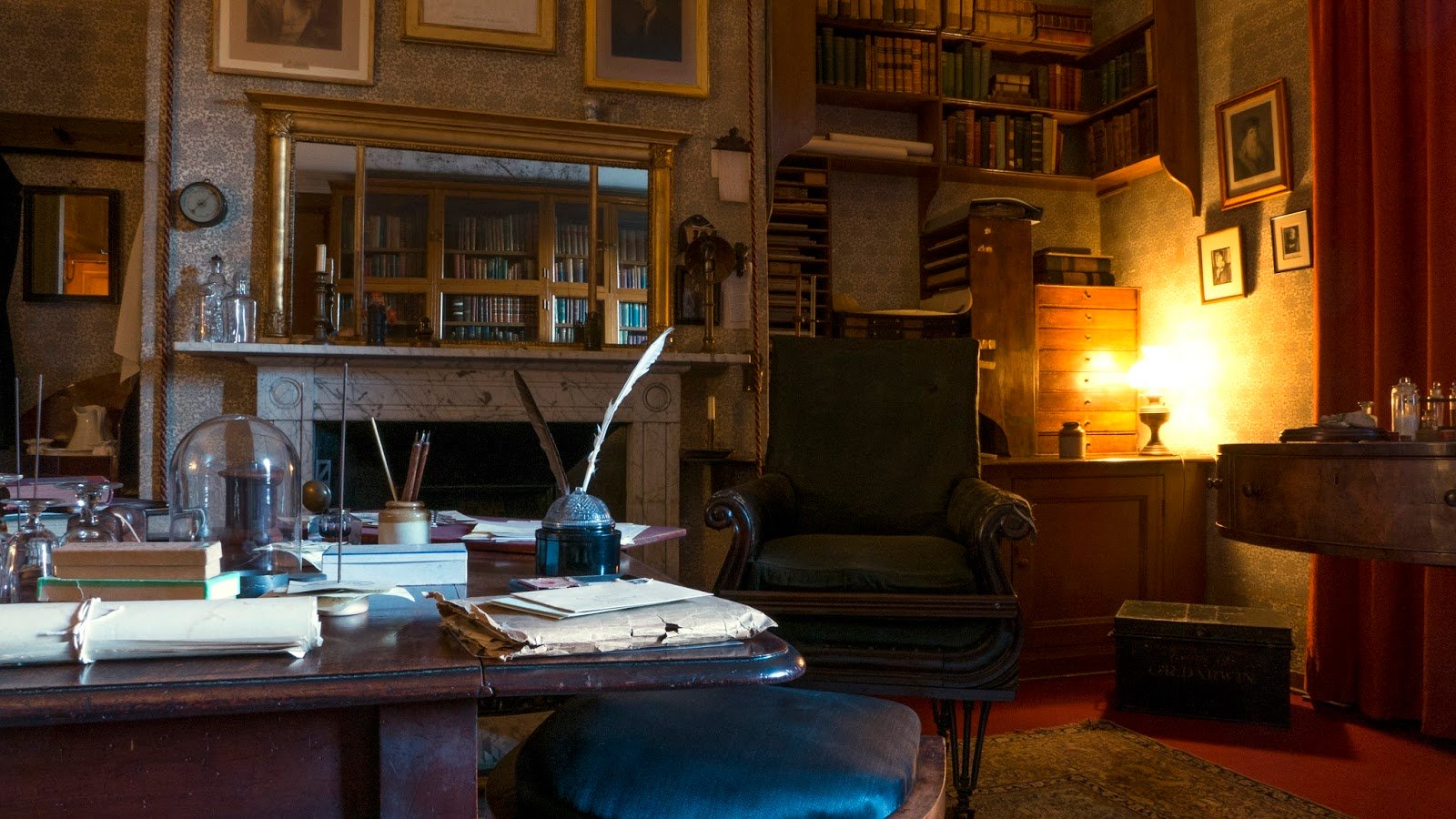
In the modern era of glass-and-chrome offices, the traditional English Study stands as a defiant sanctuary of focus, quietude, and timeless style. Often referred to as a “Home Library” or “The Den,” the British-style workspace is designed to feel like a private retreat—a place where the scent of old books and the warmth of dark wood inspire deep work and contemplation.
Here is how to curate a professional workspace that balances 19th-century gravitas with 21st-century functionality.
1. The Architectural Anchor: Bespoke Cabinetry
The hallmark of an English study is the floor-to-ceiling bookshelf. In British design, books are not just reading material; they are acoustic insulation and visual wallpaper.
- Integrated Shelving: Use dark woods like walnut, mahogany, or stained oak. If custom joinery is out of reach, painting standard wooden shelves in a deep “Heritage” color (like forest green or charcoal) creates a similar built-in effect.
- The Ladder: If space allows, a rolling library ladder adds a sense of verticality and “Old World” charm that immediately defines the room’s purpose.
2. The Desk: A Statement of Intent
The center of the room should be a substantial Pedestal Desk or a Partner’s Desk.
- Materials: Look for a desk with a leather inlay (usually gold-tooled green or burgundy leather). This provides a soft, warm surface for writing that modern laminate cannot replicate.
- Placement: Rather than pushing the desk against a wall, place it in the center of the room or “t-boned” against a window. This commanding position (often called the “Power Position”) changes the psychology of the workspace.
3. Textures of the “Gentleman’s Club” Style
To achieve that authentic London-club atmosphere, you must layer “heavy” textures that absorb sound and evoke a sense of permanence.
- The Chesterfield: No English study is complete without a tufted leather Chesterfield sofa or armchair. It serves as the “thinking corner” away from the computer screen.
- Window Treatments: Heavy velvet or high-quality wool drapes are essential. They should “pool” slightly on the floor to block drafts and dampen echoes during video calls.
- The Floor: A faded Persian or Oriental rug layered over a hardwood floor adds the necessary intricate pattern to balance the solid wood of the furniture.
4. Lighting for Focus and Mood
Lighting in an English study should be “pooled” rather than uniform.
- The Banker’s Lamp: The iconic green glass shade provides downward-focused light that is easy on the eyes for long hours of reading.
- Picture Lights: Small brass lights mounted above bookshelves or artwork create a sophisticated, museum-like glow.
- Task vs. Ambience: Use a modern LED lamp for your actual keyboard work, but keep it hidden behind a traditional silhouette to maintain the aesthetic.
Modern Integration: The “Invisible” Tech
The biggest challenge is making a 2025 setup look at home in an 1880s design.
- Cable Management: Use brass cable tidies to route wires through the desk.
- The Monitor: Choose a monitor arm that allows you to push the screen away when not in use, or hide the TV/Monitor inside a decorative cabinet.
- Soundproofing: The heavy books and fabrics mentioned earlier naturally act as a “sound studio,” making the English study perfect for high-quality podcasting or meetings.
Comparison: Executive Office vs. English Study
| Feature | Modern Executive Office | Traditional English Study |
| Desk | Minimalist/Metal | Heavy Timber/Leather Top |
| Seating | Ergonomic Mesh Chair | Leather Swivel or Wingback |
| Colors | White, Grey, Blue | Oxblood, Hunter Green, Oak |
| Storage | Hidden/Digital | Visible Books/Collectibles |
The Final Polish
To truly complete the English study, add “objects with a soul.” A brass magnifying glass, a globe, a decanter on a silver tray, or a framed vintage map. These details transition the room from a mere “office” to a personal legacy space.
Design Tip: Paint your ceiling a shade or two darker than the walls to create a “cocoon” effect. This reduces visual distractions and helps you stay “locked-in” during deep work sessions.