


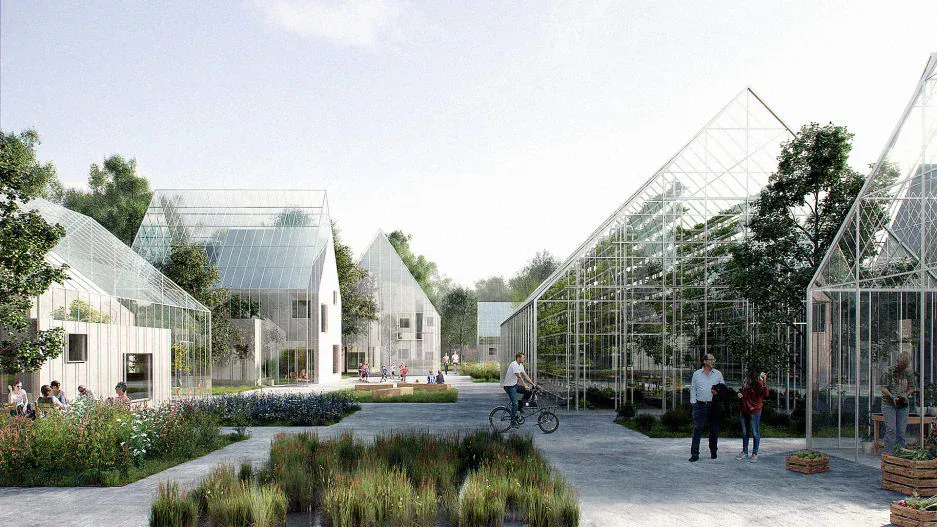
Imagine waking up to the sound of birdsong rather than London traffic, stepping outside onto cooperatively owned land, and picking your breakfast berries from a community orchard. Picture a neighborhood where your energy is powered by the wind and sun, your waste is composted back into the earth, and your neighbors aren’t strangers, but trusted friends who share your values.
This isn’t a utopian fantasy. Across Britain, a quiet revolution is taking root. From the rolling hills of Scotland to the lush valleys of Wales and the green shires of England, eco-villages are redefining what it means to live, work, and thrive together.
As we face escalating climate anxieties and a modern loneliness epidemic, could eco-villages hold the blueprint for the future of British living?
What is an Eco-Village?
At its core, an eco-village is an intentional, traditional, or urban community designed to last. They aim to radically reduce their ecological footprint through integrated housing, food production, renewable energy, and—crucially—social cohesion.
While no two eco-villages look the same, most share common pillars:
- Environmental Sustainability: Utilizing passive solar design, natural building materials (like straw bale and timber), renewable energy, and zero-waste systems.
- Social Resilience: Making decisions through consensus, sharing resources (like tools, cars, and childcare), and fostering deep interpersonal connections.
- Economic Viability: Many eco-villages strive to create local green jobs, support micro-enterprises, and operate on collaborative economic models.
Pioneers of the British Movement
Britain has a rich history of alternative communities, but the modern eco-village movement has evolved from the counter-culture communes of the 1970s into sophisticated, highly organized hubs of innovation.
Take Findhorn in Moray, Scotland—one of the oldest and most famous eco-villages in the world. What started as a caravan site in 1962 is now a thriving international educational center boasting the smallest ecological footprint of any community in the industrialized world, alongside pioneering ecological building designs and wind turbines.
Further south in Wales, Lammas Ecovillage represents a pioneering model for low-impact rural living. Nestled in the Pembrokeshire hills, residents were granted planning permission under the Welsh Government’s innovative “One Planet Development” policy. Here, families live off the land, growing their own food, generating their own power, and proving that humans can act as ecosystem enhancers rather than degraders.
And it’s not just rural. Urban eco-villages, co-housing projects, and transition towns are springing up in cities like Bristol, Brighton, and Leeds, proving that you don’t need 50 acres of Welsh countryside to live sustainably.
Why Are We Craving the Eco-Village Model Now?
The appeal of eco-villages is surging, driven by a convergence of modern crises:
- The Climate Emergency: With government climate targets often feeling too slow and distant, people want agency now. Living in an eco-village allows individuals to drastically lower their carbon footprint overnight.
- The Cost-of-Living Crisis: Traditional housing in the UK is notoriously expensive and energy-inefficient. Eco-villages offer a compelling alternative: shared ownership models, drastically lower energy bills through Passivhaus design, and shared food production.
- The Loneliness Epidemic: Modern British society is increasingly atomized. We often don’t know the names of the people living next door. Eco-villages rebuild the “village square,” offering built-in community, mutual aid, and emotional support.
The Challenges: It’s Not All Straw Bales and Sunshine
While the romanticism of eco-village life is powerful, the reality requires hard work, compromise, and resilience.
- The Planning Permission Hurdle: Britain’s strict and often archaic planning laws are notoriously unfriendly to alternative architecture and low-impact rural living. Securing land and permits can take years of legal battles.
- Group Dynamics: Living in close proximity with people who share your ideals sounds easy, but human friction is inevitable. Consensus decision-making can be painstakingly slow, and community governance requires high levels of emotional intelligence and conflict-resolution skills.
- Privilege vs. Accessibility: Historically, establishing an eco-village requires capital—either to buy land or secure mortgages for non-standard housing. Ensuring these spaces are accessible to people from diverse socioeconomic backgrounds remains a major challenge for the movement.
Are Eco-Villages the Future?
It is unlikely that the entire British population will pack up their belongings and move into rural communes. Most of us will continue to live in towns and cities.
However, the principles of eco-villages are poised to infiltrate mainstream British life. We are already seeing elements of eco-village design bleeding into urban planning:
- Co-housing schemes are gaining traction among retirees and young families alike.
- District heating systems and community-owned renewable energy projects are becoming more common.
- Regenerative agriculture and urban farming initiatives are transforming how we think about food security.
Eco-villages are functioning as society’s “beta testers.” They are living laboratories experimenting with technologies, social structures, and lifestyles that the rest of us might desperately need in 20 or 30 years.
Closing Thoughts
Ultimately, the rise of the British eco-village is about more than just solar panels and organic vegetables. It is a cultural reimagining. It asks a fundamental question: How can we live well, together, without costing the Earth?
Whether you’re planning to build a straw-bale home in Wales, join an urban co-housing project in Manchester, or simply start a vegetable-sharing scheme with your street, the eco-village movement reminds us of a powerful truth: the future of sustainability isn’t solitary—it’s communal.