
Victorian terraced houses are the backbone of British architecture. With their high ceilings, ornate cornicing, and handsome brick facades, they possess a charm that modern builds just can’t replicate.
However, they were built in the 19th century. Life looked very different back then. Rooms were compartmentalized to keep heat in and servants out, kitchens were often relegated to dark back extensions, and insulation was… well, practically non-existent.
Modernising a Victorian terrace is a delicate balancing act. You want the convenience, light, and energy efficiency of 21st-century living, but you don’t want to strip away the very soul that made you fall in love with the house in the first place.
Here is how to successfully bridge the gap between historic charm and modern comfort.
Reconfigure the Layout (Without Destroying the Flow)
Traditional Victorian terraces are notoriously “choppy”—a maze of small, dark rooms on the ground floor. The modern desire is almost always open-plan, light-filled spaces.
- The Modern Fix: Knocking through the traditional double reception room (the front and middle parlour) is a classic move. It creates a fantastic, spacious living-dining area.
- Preserving the Character: If you do open up spaces, consider installing pocket doors, salvaged double doors, or crittall-style glass partitions. This allows you to have an open-plan feel when entertaining, but lets you close off the rooms to trap heat and create cosy, intimate spaces in the evening.
Celebrate and Restore Original Features
Before you bring in the minimalist IKEA furniture, take stock of what the house already has to offer. Original features are the ultimate luxury in interior design.
- The Details: Cast iron fireplaces, ceiling roses, picture rails, and deep skirting boards are gold dust. If they’ve been painted over, carefully strip them back. If they’re missing, source authentic salvage pieces.
- The Floorboards: Victorian floorboards are often made of wide-plank timber. Instead of covering them up with cheap carpet, sand them down, treat them with a natural matte seal, and let their imperfections tell a story.
Tackle the “Dark Middle”
Terraced houses, by definition, share walls on either side. This means natural light only enters from the front and the back, often leaving the middle of the house feeling dark and gloomy.
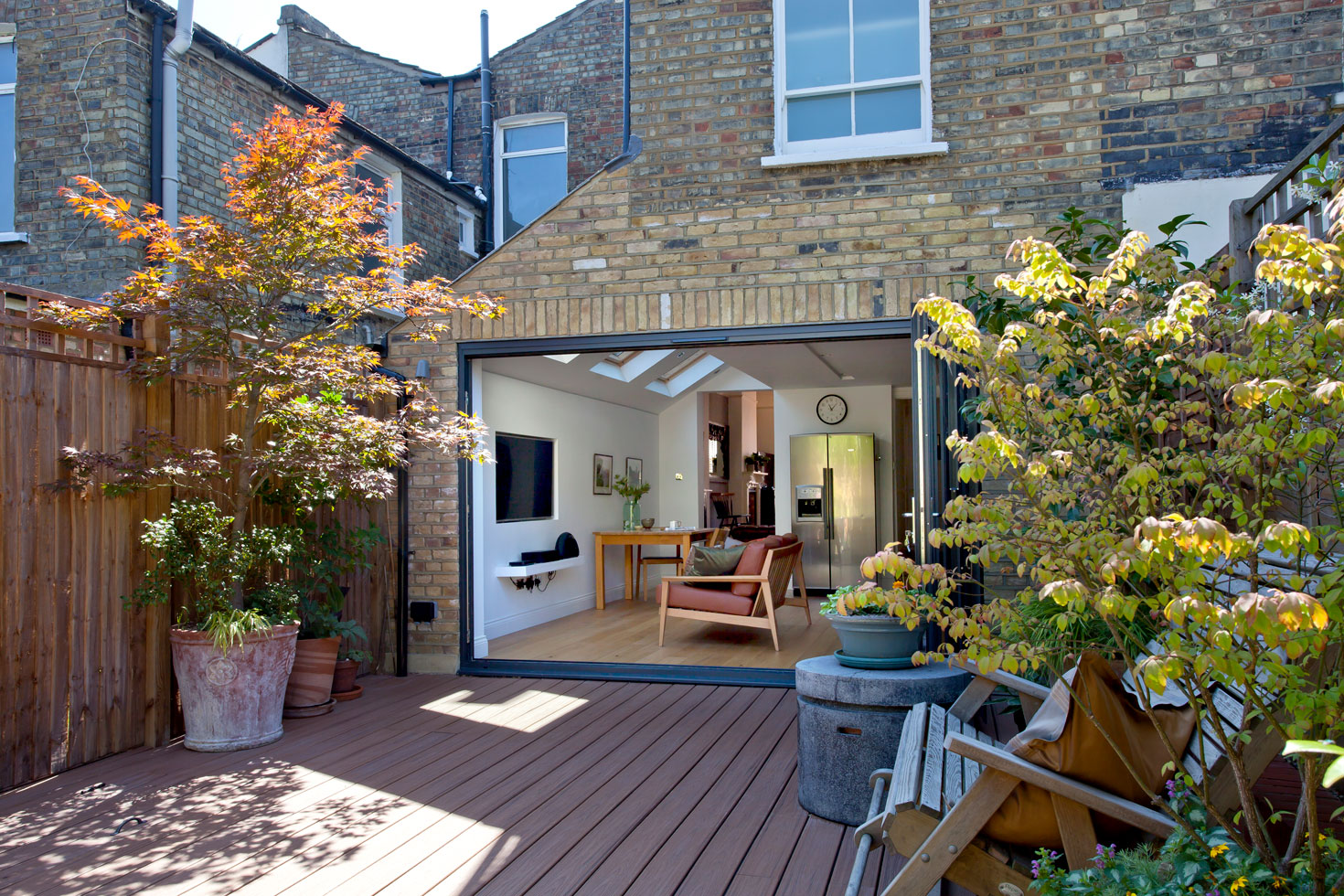
- The Modern Fix: Embrace glass. Side-return extensions—filling in the gloomy alleyway usually found beside the back addition of a terraced house—are a game-changer. By using glass roofs and Crittall-style floor-to-ceiling doors, you flood the kitchen and dining area with natural light.
- Reflective Surfaces: Use clever lighting design, internal glass transoms (windows above doors), and light paint palettes in central hallways to bounce what little natural light there is deeper into the home.
Marry Old and New in the Kitchen
The kitchen is usually the heart of the modern home, but dropping a hyper-gloss, ultra-futuristic kitchen into a Victorian shell can feel jarring.
- The Balance: Contrast is your best friend. Pair sleek, handleless modern cabinets with a rustic, reclaimed wood island or concrete countertops.
- Expose the Structure: If you’re opening up the ground floor, don’t hide all the beams. Leaving a steel RSJ (Rolled Steel Joist) exposed and painted in a dark, matte color nods to the building’s industrial structural upgrade while looking effortlessly contemporary.
Upgrade Energy Efficiency (Secretly)
Victorian houses are notoriously draughty. Modernising isn’t just about looks; it’s about making the house warm enough that you don’t need to wear a puffer jacket indoors in January.
- Windows: Single-glazed sash windows are beautiful, but terrible for heat retention. Look into retrofitting them with discreet double glazing, or install secondary glazing on the inside, which preserves the exterior historic facade while keeping the heat in.
- Insulation: Insulate the loft (where a huge amount of heat is lost) and consider underfloor heating when you redo the ground floor. It warms the space evenly and rids you of ugly modern radiators that take up valuable wall space.
Curate Your Colour Palette
Colour is the fastest way to set the mood in a home. While brilliant white can make modern apartments pop, it can sometimes feel a bit cold and clinical in a Victorian terrace.
- The Palette: Rich, moody tones—like deep forest greens, navy blues, earthy terracottas, and warm taupes—complement the architectural shadows cast by Victorian cornicing.
- Feature Walls: Let the period features do the talking by keeping walls relatively simple, or use heritage paint brands (like Farrow & Ball or Little Greene) whose historical pigment depths naturally suit older plaster.
Modernising a Victorian terraced house shouldn’t feel like a battle between the past and the present. It should feel like a conversation.
By respecting the proportions and history of the building while injecting your own functional, modern lifestyle needs into the space, you’ll create a home that is ready for the future while deeply rooted in the past.