
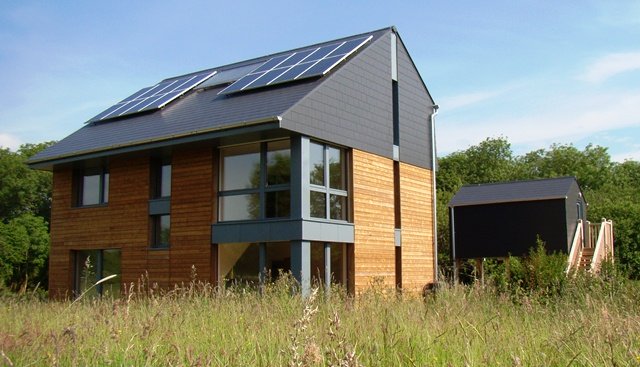
As energy prices fluctuate and the climate crisis intensifies, the concept of the Passivhaus (Passive House) has transitioned from a niche architectural interest to a mainstream ambition for UK self-builders. But for many, the ultimate dream isn’t just a low-energy home—it is the off-grid, fully autonomous house.
In the context of the UK’s damp winters and grey skies, is it actually possible to build a home that requires zero external input for heat, water, and power?
What Makes a Passivhaus?
Before discussing autonomy, we must understand the foundation. A certified Passivhaus is built according to five strict principles:
- Exceptional Insulation: Wrapping the building in a continuous thermal “tea cosy.”
- Airtightness: Eliminating draughts to keep warmth inside.
- High-Performance Windows: Usually triple-glazed, oriented to harvest solar heat in winter.
- Thermal Bridge-Free Design: Ensuring there are no “weak spots” in the structure.
- MVHR (Mechanical Ventilation with Heat Recovery): A system that provides fresh filtered air while recovering up to 90% of the heat from outgoing stale air.
By following these, a UK home can reduce its heating demand by approximately 75% compared to a standard new build.
The Challenge of Full Autonomy in the UK
Building a “Passive” house is achievable anywhere in Britain, but making it fully autonomous (off-grid) adds three significant hurdles:
1. The Winter Energy Gap
The UK’s biggest challenge is the seasonal mismatch. We have an abundance of solar energy in the summer, but very little in December and January—exactly when we need it most. To go fully off-grid, a Passivhaus requires a massive solar PV array and a substantial battery storage system (such as a Tesla Powerwall or similar). Even then, a week of “Anticyclonic Gloom” (persistent thick cloud) can drain batteries to zero.
2. Water and Waste Self-Sufficiency
Autonomy isn’t just about electricity; it’s about water. In rural UK areas, this is often managed via:
- Rainwater Harvesting: Collecting roof runoff for toilets, washing machines, and—with high-level UV filtration—drinking water.
- On-site Sewage Treatment: Using reed beds or advanced package treatment plants to process waste without a connection to the mains sewer.
3. The Cost of Over-Engineering
To guarantee 100% autonomy in the UK, you often have to “over-build” the system to account for the worst-case weather scenario. This can lead to a diminishing return on investment where the cost of the last 5% of autonomy doubles the budget.
The Realistic Hybrid: Passivhaus Plus
Recognising the difficulty of true off-grid living, the Passivhaus Institute introduced the Passivhaus Plus standard. These are “Net Zero” homes that produce as much energy as they consume over the course of a year.
In this model, the house stays connected to the National Grid. It exports excess energy during the sunny British summer and imports a small amount during the dark winter months. This “grid-as-a-battery” approach is currently the most viable and sustainable path for UK homeowners.
Essential Tech for the Autonomous Dream
| Technology | Role in Autonomy | UK Viability |
| Solar PV & Battery | Primary power source | High (with seasonal management) |
| Air Source Heat Pump | Hot water and backup heating | Excellent when paired with Passivhaus |
| MVHR | Fresh air and heat retention | Essential for all Passivhaus builds |
| Boreholes/Rainwater | Independent water supply | High, but requires strict filtration |
The Verdict: Is it Possible?
Yes, it is entirely possible to build a fully autonomous Passivhaus in the UK, but it requires a disciplined lifestyle and a significant upfront investment in energy storage. For most, the “Passivhaus Plus” (Net Zero) approach offers the perfect balance—providing a home that is incredibly cheap to run and environmentally friendly, without the risk of the lights going out during a dark British January.