


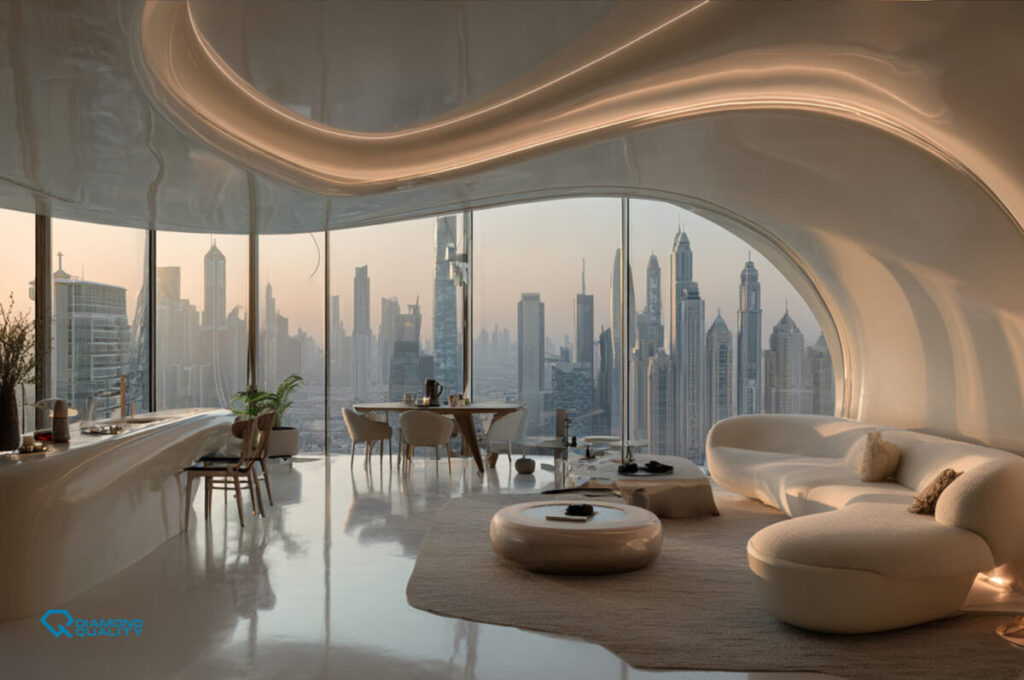
The concept of the “British home” has remained relatively unchanged for decades—brick walls, pitched roofs, and a reliance on gas boilers. But as we look toward 2030 and the following decades, the intersection of technology, climate necessity, and shifting social habits is set to trigger a radical transformation in how we live.
From the way we build our homes to the way we power them, here is a glimpse into what the future of UK housing might hold.
The Era of the “Energy-Positive” Home
By 2030, the government’s push toward Net Zero will be the primary driver of home design. We are moving away from passive houses toward “active” ones.
Beyond just solar panels, future UK homes will act as micro-power plants. Using advanced battery storage technology, homes will store energy generated during the day to power the house (and potentially an electric vehicle) overnight. We’ll see the death of the gas boiler, replaced by air-source heat pumps and smart grid integration, where your home intelligently manages its energy consumption based on real-time grid prices.
Modular and Precision-Engineered Housing
The chronic shortage of homes in the UK has made us look toward MMC (Modern Methods of Construction). By 2030, we should expect a significant shift toward factory-built, modular homes.
Imagine a house “printed” or assembled in a climate-controlled factory in sections, then transported to a site and locked together in a matter of days. This isn’t just faster; it’s more sustainable. Precision engineering means better insulation levels, fewer thermal bridges (heat loss points), and significantly reduced waste compared to traditional building sites.
The “15-Minute Neighborhood” Influence
The pandemic accelerated the remote work revolution, and this is permanently changing how we use our living space. By 2030, the “home office” will no longer be a guest bedroom with a laptop; it will be an integrated design feature, soundproofed and ergonomically optimized.
Furthermore, the rise of the “15-minute neighborhood”—where work, leisure, and essential services are within a short walk or cycle—will influence urban planning. We will see a shift away from sprawling commuter belts toward high-density, mixed-use living spaces that prioritize community feel and green infrastructure over car-centric layouts.
Smart Homes (That Actually Work)
We’ve been promised “smart homes” for years, but we’ve mostly ended up with fragmented apps and glitches. By 2030, the “Invisible Home” will emerge.
Think of AI-driven home management that goes beyond turning lights on. Our homes will monitor structural integrity through sensors, track air quality to automatically improve ventilation, and optimize water usage in real-time. Furniture may become “chameleon-like”—walls that shift to create new room configurations or modular partitions that allow a one-bedroom flat to transform into a multi-functional space as family needs evolve.
Retrofitting the Past
While new builds get all the headlines, the biggest challenge for the UK is our existing housing stock—much of which is among the oldest and least energy-efficient in Europe.
Between 2030 and 2050, we will see a massive national effort to “retro-fit” Victorian terraces and post-war semis. This will be the biggest DIY-meets-industrial project in history: internal wall insulation, smart glazing, and district heating networks that serve whole streets. The “future of the home” isn’t just building new ones; it’s upgrading the ones we already love.
Cohousing and Intergenerational Living
As the UK population ages and housing costs remain a hurdle for younger generations, we are likely to see a rise in communal living models. 2030 and beyond will see more “pocket neighborhoods” where residents have private living spaces but share large communal kitchens, gardens, and workshops. It’s a return to the “village” model, reimagined for the modern urban landscape to combat loneliness and reduce the individual carbon footprint.
The British home of 2030 won’t necessarily look like a sci-fi space station. It will likely look like a familiar street, but beneath the surface, it will be a high-tech, responsive, and ultra-efficient ecosystem.
The homes of the future will be less about “owning property” and more about “managing resources.” As we balance the need for sustainability with the desire for comfort, one thing is certain: our homes are about to work a lot harder for us than they ever have before.
What feature would you most like to see in your future home? Let us know in the comments below!