
When building a new home, remodeling, or simply replacing a broken piece of hardware, choosing the right door mechanism feels like a minor detail—until you have to use it every single day.
Door hardware bridges the gap between interior design and daily functionality. But with so many options on the market, it’s easy to get confused by the terminology. What’s the difference between a knob and a lever? Where does a latch fit into the equation?
Whether you’re going for a sleek modern aesthetic or maximum accessibility, here is your ultimate guide to understanding door knobs, levers, and latches.
Door Knobs: The Timeless Classic
Door knobs are the traditional choice found in homes across the world. Characterized by their round (or occasionally oval) shape, they are operated by twisting the mechanism to retract the latch and open the door.
The Pros:
- Timeless Aesthetic: Knobs are the go-to choice for traditional, vintage, craftsman, and colonial-style homes. They offer a classic symmetry that feels right at home in historic or rustic settings.
- Space-Saving: Because they don’t stick out very far from the door face, they are less likely to snag clothing or bump into nearby walls in tight hallways.
- Child Deterrent: Toddlers often lack the wrist strength and coordination required to grip and twist a round knob, making them a subtle child-safety feature for pantries or utility closets.
The Cons:
- Accessibility Challenges: For anyone with arthritis, carpal tunnel, or limited hand mobility, gripping and twisting a knob can be painful or downright impossible.
- Slippery When Wet: If your hands are wet, greasy, or full of groceries, getting a good grip on a round knob can be frustrating.
Best Used For: Interior bedroom and bathroom doors in homes without accessibility concerns, or historical/traditional restorations.
Door Levers: The Accessible & Modern Choice
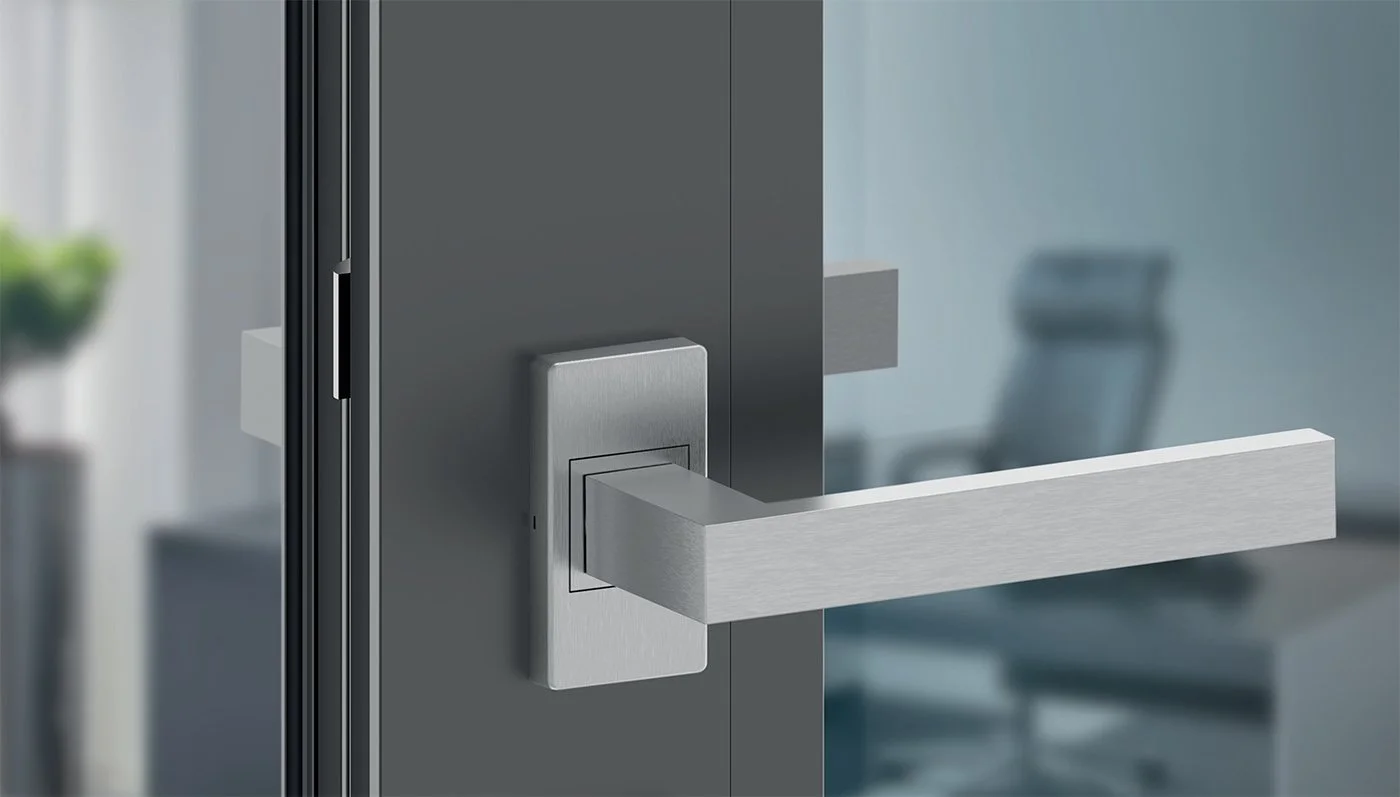
Door levers feature a horizontal handle that is pushed down (usually) to retract the latch. They have become massively popular in both contemporary architecture and universal design.
The Pros:
- ADA Compliant & Accessible: Levers can be operated with the push of a hand, an elbow, or a wrist. This makes them ideal for households with seniors, small children, or individuals with disabilities. In fact, they are required by the Americans with Disabilities Act (ADA) in commercial buildings.
- Effortless Operation: Carrying laundry, grocery bags, or holding a sleeping baby? You can easily pop a lever open with your hip or elbow.
- Design Versatility: While popular in modern and minimalist homes, levers also come in ornate, rustic designs that fit farmhouse and industrial aesthetics.
The Cons:
- The “Snag” Factor: Because the end of the lever sticks out, belt loops, purse straps, and loose clothing have a notorious habit of catching on them as you walk by.
- Pet Proclivities: Clever pets (especially large dogs or mischievous cats) quickly learn that they can jump up and press down on a lever to open doors. Don’t be surprised if your dog lets themselves into your bedroom!
Best Used For: Main living areas, aging-in-place/universal design homes, modern interiors, and high-traffic family rooms.
Latches: The Mechanical Heart of the Door
While knobs and levers are the handles we interact with, the latch is the unsung mechanical hero hidden inside the door edge.
Often, people confuse “latches” with specific styles of hardware, but a latch is actually the spring-loaded metal tongue that extends from the edge of the door into the door frame to keep it shut.
However, when people refer to “latches” as a style of hardware (such as thumb-latches or magnetic latches), they are usually talking about the mechanism used to keep a door closed without necessarily needing a turning knob.
Common Latch Styles:
- Spring Latch: The standard mechanism found on almost all knobs and levers. It has a bevelled edge so the door can push and “click” shut automatically.
- Privacy Latch: Often used on bathroom doors, featuring a simple push-button or turn-lock on the inside.
- Thumb-Latch: Popular on front doors and rustic gates, where you press a small thumb lever down on the exterior plate to lift the internal latch.
- Magnetic Latch: Uses magnets to hold the door flush against the frame without a mechanical click—great for ultra-modern, quiet-closing doors.
Best Used For: Every door needs a latch! The style of latch you choose depends entirely on the function of the door (passage, privacy, or dummy).
How to Choose the Right Hardware for Your Home
When making your final decision, ask yourself these three questions:
- Who lives in the house? If you have elderly family members, plan to age in place, or have toddlers who love to drop heavy items, levers offer superior ergonomics. If you have smart pets that like to open doors, stick to knobs.
- What is the design style? Match your hardware to your home’s architectural DNA. Victorian homes scream for glass or brass knobs, while sleek urban lofts shine with matte black or brushed nickel levers.
- Where is the door located? Exterior doors require heavy-duty deadbolts and security latches. Interior doors can focus more on passage or privacy functions.
Door hardware may seem like a small detail, but it heavily impacts the daily flow and feel of your home. By balancing ergonomics, style, and function, you can choose knobs, levers, and latches that not only look fantastic but make your daily routine a little bit smoother.
Which do you prefer in your home—the classic grip of a knob or the effortless push of a lever? Let us know in the comments below!