
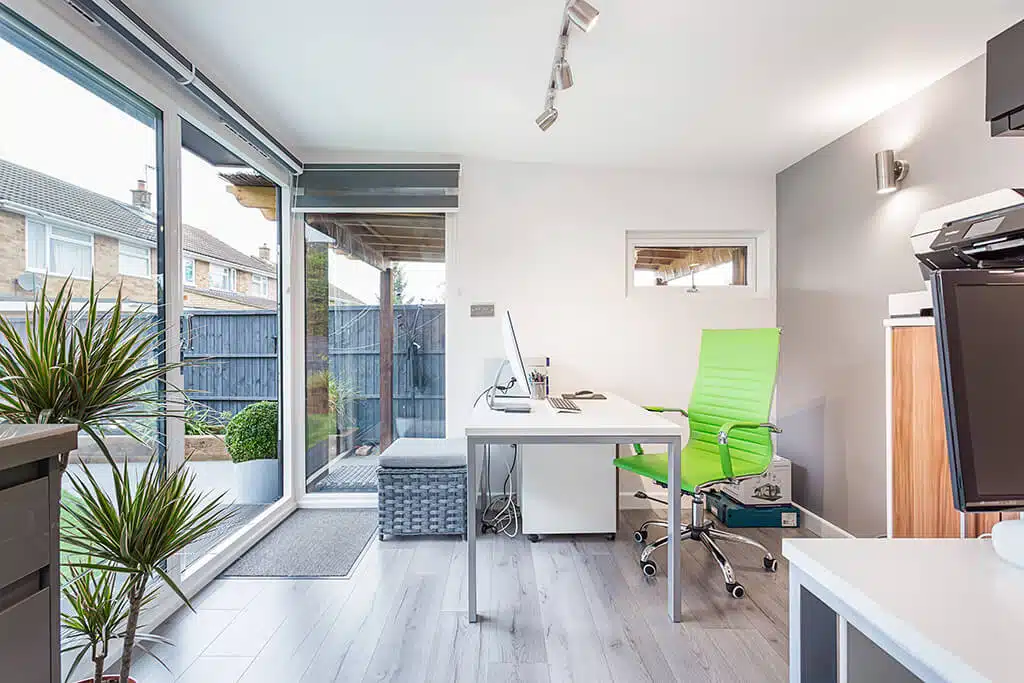
As remote work and hybrid schedules become the new normal, the way we use our living spaces has fundamentally shifted. Gone are the days when the kitchen table sufficed as a makeshift desk. We need dedicated space—and fast.
When homeowners start looking for extra square footage, a major debate usually ensues: Should we build a traditional house extension, or invest in a standalone garden office?
Beyond solving your immediate space crunch, both projects represent a significant financial investment. But which one actually adds more value to your home?
Let’s weigh the pros, cons, and return on investment (ROI) for both options to help you decide.
The Contender #1: The House Extension
The traditional powerhouse of home improvements.
A house extension—whether it’s a kitchen-diner overhaul, a double-story addition, or a wrap-around—integrates seamlessly into your existing living space.
The Financial Value (ROI)
House extensions generally offer a high return on investment, often recouping 70% to 80% of their cost in added property value. According to various UK and US real estate studies, adding square footage to your footprint is the most straightforward way to push your home into a higher valuation bracket, especially if you add a bedroom or dramatically improve the kitchen/living flow.
Pros:
- Versatility: An extension can be anything—a larger kitchen, a bedroom with an ensuite, a playroom, or a home office. It adapts as your family grows.
- Seamless Integration: You stay on one continuous floor plan. No walking through the rain to get to your desk in January.
- Curb Appeal: A well-designed extension can modernize the entire look of your home’s rear exterior.
Cons:
- The Cost: Extensions are notoriously expensive. Between foundations, structural steel, roofing, and interior finishes, costs escalate quickly.
- The Disruption: Be prepared for months of dust, builders in your house, knocked-down walls, and potentially having no kitchen for weeks.
- Planning Permission & Red Tape: While some extensions fall under “Permitted Development,” larger projects require rigorous planning permission, architectural drawings, and building regulations sign-offs.
The Contender #2: The Garden Office
The modern, flexible disruptor.
A detached timber-frame or modular pod nestled at the bottom of the garden has become the ultimate status symbol for the modern professional.
The Financial Value (ROI)
A quality garden room typically adds between 5% and 8% to a home’s overall value. While the absolute monetary return might be lower than a massive £50,000 extension, the percentage return on a smaller investment can actually be remarkably high. Crucially, a garden office appeals heavily to today’s tech-savvy, hybrid-working buyers. It acts as an immediate USP (Unique Selling Proposition) on a property listing.
Pros:
- Speed and Zero Mess: Most garden offices are prefabricated or built by specialists in a matter of weeks—sometimes days. The mess is contained entirely outside your house.
- Work/Life Separation: The psychological benefit of a commute down the garden path is massive. When 5 PM hits, you “leave” work and walk back to your house.
- Fewer Planning Hurdles: In many regions, garden offices fall under permitted development rights, provided they meet certain height and size restrictions, saving you months of bureaucratic waiting.
- Portability (Sometimes): While permanent foundations are usually used, some modular designs can actually be dismantled and moved if you ever relocate.
Cons:
- Utility Challenges: Running electricity, Wi-Fi, and especially plumbing (if you want a toilet or kitchenette) out to the garden can add significant trenching and installation costs.
- Loss of Garden Space: If you have a small plot, a garden office eats into the lawn space you might otherwise use for kids, pets, or relaxing.
- Weather Exposure: You have to brave the elements (rain, snow, ice) to commute to work every morning.
The Verdict: Which Adds More Value?
It depends entirely on who you are trying to sell to in the future and what your current home is lacking.
- Choose a House Extension if: Your home is already cramped, you need more primary living space (like a larger kitchen or an extra bedroom), and you have a larger budget. If you live in a family-heavy neighborhood, square footage is king. An extension will almost always yield a higher total cash return on your investment.
- Choose a Garden Office if: Your main issue is dedicated workspace, you want to avoid the nightmare of living through a home renovation, and your budget is more modest. In a post-pandemic housing market, buyers love the flexibility of a turnkey garden office that can double as a yoga studio, teen hangout, or guest room.
If pure property valuation and maximum square footage are your only goals, the house extension wins.
However, if you factor in the cost-to-value ratio, speed of installation, and avoidance of home renovation stress, the garden office is often the smarter, higher-ROI play for the modern homeowner.
Are you leaning toward the convenience of a garden office, or are you ready to knock down some walls for an extension? Let us know in the comments below!