


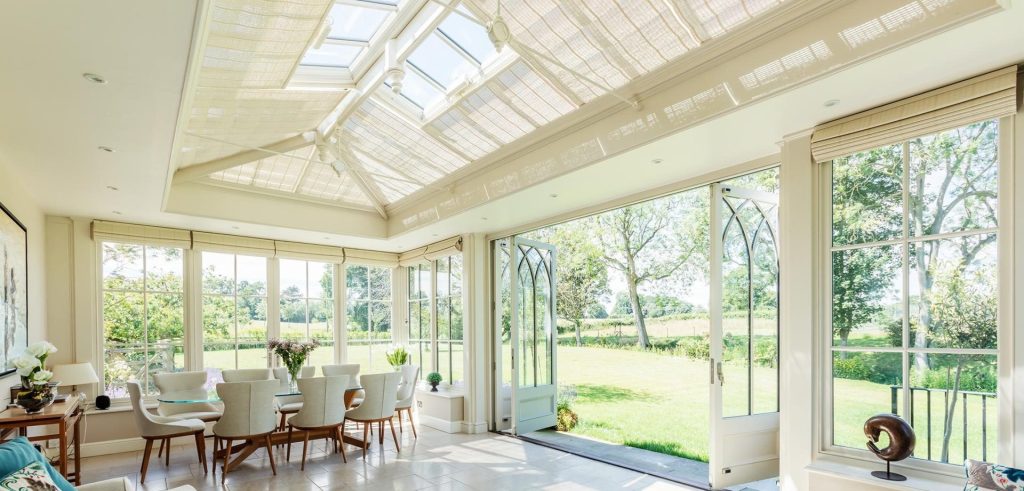
If you’re looking to expand your living space while inviting the beauty of the outdoors inside, two options likely sit at the top of your list: the conservatory and the orangery.
Both structures are fantastic ways to add light and square footage to a property, but they offer very different aesthetics, construction methods, and financial outcomes. If you’re weighing up which one will offer the best return on investment for your home, here is the breakdown of how they compare.
The Conservatory: The Glass-First Approach
Traditionally, a conservatory is defined by its high ratio of glass. With walls almost entirely made of glazing and a glass roof, these structures are designed to be light, airy, and essentially an extension of the garden.
- The Vibe: Modern, bright, and breezy. It feels like sitting outside while being protected from the wind and rain.
- The Cost: Generally more affordable. Because they require less brickwork and less complex structural engineering, they are often a faster and cheaper build.
- The Value: A conservatory is a great way to add “usable” square footage. However, in colder climates, they can suffer from temperature fluctuations, potentially making them less functional during the peak of winter or the height of summer unless you invest in high-end climate-controlled glass.
The Orangery: The “Room-First” Approach
The orangery is a more substantial structure. Historically used to house citrus trees during winter, modern orangeries are built with solid brick or stone pillars, larger roof lanterns, and more structural insulation.
- The Vibe: Sophisticated, timeless, and cozy. It feels less like a glass box and more like a permanent extension of your home’s existing architecture.
- The Cost: Higher. The increased masonry work and structural roofing mean a higher budget is required for materials and labor.
- The Value: Because an orangery is better insulated and effectively functions as a year-round, multi-purpose living space, it is often viewed by estate agents as a “premium” home improvement.
Which Adds More Value?
When it comes to property value, the answer isn’t just about the structure—it’s about the “lifestyle appeal.”
1. Integration and Functionality
Buyers today are looking for versatile space. Because orangeries have solid walls, they are easier to furnish (wall space allows for shelving, TVs, and artwork) and feature better thermal efficiency. This makes an orangery a “true room,” which is generally perceived as adding more value to a prospective buyer who wants a dedicated dining room, home office, or lounge.
2. Curb Appeal
An orangery is typically designed to match the brickwork and style of the existing house, making it look like it was an original part of the build. A conservatory, while beautiful, can sometimes look like a “tacked-on” addition if not carefully designed. The higher level of integration provided by an orangery often translates to a higher ceiling price in the property market.
3. Return on Investment (ROI)
While an orangery costs more to build, it often yields a higher return. Because of its sturdy construction and year-round usability, it is considered a more permanent improvement. If you are living in a high-value area, an orangery is likely to contribute more significantly to your property’s resale value than a simple conservatory.
The Verdict
- Choose a Conservatory if: You are working with a tighter budget, you want the maximum amount of natural light, and you are looking for a space that connects seamlessly to your garden for casual summer living.
- Choose an Orangery if: You want a luxurious, year-round living space that adds a sense of permanent grandeur to your home. If your goal is to maximize the resale value of your property, the orangery is the superior investment.
Pro-Tip: Regardless of which you choose, focus on quality. A poorly built, DIY-style structure can actually decrease your home’s value due to future maintenance headaches. If you’re aiming for long-term value, always prioritize high-quality glazing, proper foundation work, and professional design that complements your home’s character.
Are you planning an extension this year? Let us know in the comments whether you’re leaning toward the classic charm of an orangery or the light-filled joy of a conservatory!