



Chimneys and their crowning feature, the chimney stack, are often the most defining, yet most overlooked, elements of a historic building’s silhouette. Far from being mere utilitarian pipes, these structures are steeped in history, embodying a crucial balance between functional necessity and decorative flair. From Medieval castles to Victorian terraces, the chimney has served as both the engine of domestic comfort and a powerful symbol of status and architectural intent.
The Essential Functional Role
Historically, the primary function of the chimney was simple: to safely remove smoke and combustion gases from the interior of a building. This innovation marked a significant turning point in domestic life, allowing for safer, warmer, and more complex interior spaces.
1. The Engine of the Hearth 🔥
The entire chimney structure—including the fireplace, flue, and visible stack—is designed to facilitate natural draught. Hot air and smoke naturally rise, and the chimney’s height and internal design enhance this upward flow, ensuring that harmful gases are dispersed high above the roofline.
2. Preventing Downdraught with Chimney Pots
The visible extension above the roof, the chimney pot, wasn’t a purely decorative feature when it was introduced. It became essential with the widespread adoption of coal as a domestic fuel. By increasing the effective height of the flue and narrowing the opening, the terracotta or brick pot serves several key functions:
- It improves the draw (upward pull) of the smoke, making the fireplace more efficient.
- It helps to mitigate downdraughts caused by wind turbulence over the roof, preventing smoke from being blown back into the home.
- It protects the flue from rain, birds, and debris.
Despite the rise of central heating, the historic chimney remains integral to a building’s structure, often assisting with natural ventilation and maintaining the integrity of the roofline.

Architectural Symbolism and Decorative Expression
As heating technology became standardized, the chimney stack and its components transitioned from sheer utility to becoming a major form of architectural expression.
1. Vertical Emphasis and Skyline Character
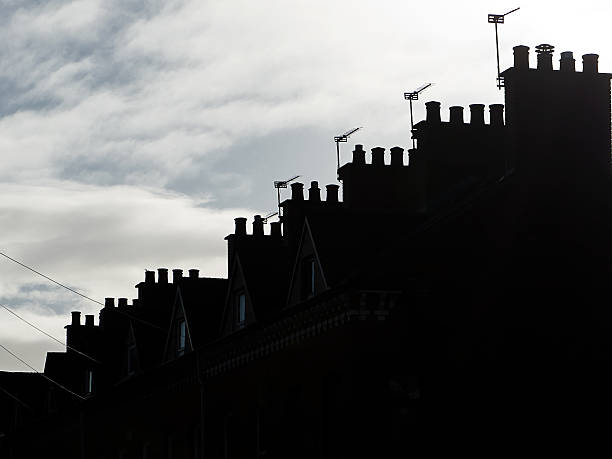
The chimney stack provides vital vertical emphasis to the building, punctuating the roofline and defining the rhythm and character of a neighborhood or village. In historic towns, the arrangement of chimney stacks contributes significantly to the recognizable visual pattern of the built environment. Removing a stack, even a disused one, can fundamentally alter a building’s historic character and silhouette.
2. A Marker of Wealth and Status
In the Middle Ages, the move from an open hearth in the center of a hall to an enclosed fireplace with a proper chimney was a sign of status and wealth. Early examples in manor houses were elaborate, often featuring multiple flues to serve various rooms, signaling the owner’s ability to afford private, heated chambers.
- Tudor Era: Chimneys became highly decorative elements of brickwork, often featuring intricate patterns, twists, and octagonal shafts, showcasing masons’ craftsmanship.
- Victorian Era: This became the ‘Golden Age’ of the chimney pot. Faced with rows of identical terraced houses, homeowners and architects used ornate chimney pots (featuring crowns, cornices, or fantastical shapes) as an affordable, visible way to express individuality and differentiate their homes.
3. Material and Style Detailing
The design details of the stack itself reflect the building’s overall style, period, and local materials:
- Materials: Stacks were built from the same material as the walls—dressed stone in the Cotswolds, or local brick in industrial cities.
- Mouldings: Classical details like cornices, string courses, and plinths were often used on Georgian and Victorian stacks to integrate them seamlessly with the building’s classical facade.
Today, retaining and maintaining historic chimneys is a key concern in architectural conservation, ensuring that the skyline continues to tell the story of domestic comfort, craftsmanship, and the evolution of the built form.