
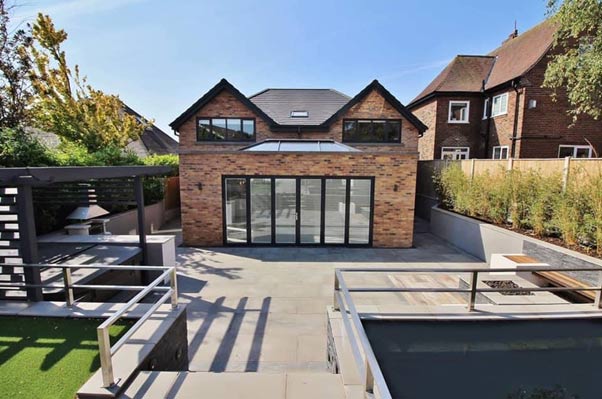
If you’ve ever dreamed of adding a loft conversion, a rear extension or a single‑storey side wing, the thought of a lengthy, costly planning application can feel like a dead‑end. In England (and much of the UK), Permitted Development Rights (PDR) give you a legal shortcut to expand your home without the need for a full planning permission. This guide walks you through everything you need to know – from the basics of PDR to a step‑by‑step checklist that will help you get your extension approved quickly and compliantly.
1. What Exactly Are Permitted Development Rights?
Permitted Development Rights (PDR) are a set of national planning rules that allow certain building works to be carried out without the need to submit a full planning application to your local planning authority (LPA). Instead, you simply need to notify the council using a Form DP1 (or, for some loft conversions, a DP2). If the LPA raises no objections within eight weeks, your work can legally proceed.
Why do they exist?
- To speed up low‑impact development.
- To reduce the administrative burden on both homeowners and councils.
- To encourage the efficient use of existing housing stock.
Key point: PDR are not a free‑for‑all. They come with strict limits on size, height, location, and design. Going beyond these limits means you must submit a full planning application.
2. Who Can Use Permitted Development Rights?
| Eligibility | Typical Situation |
|---|---|
| Domestic dwellings (detached, semi‑detached, terraced, or flats) built after 1 July 1948 | Most modern houses qualify. |
| Listed buildings (Grade I, II*, II) | Rarely – special consent is needed. |
| Properties in designated areas (conservation areas, national parks, Areas of Outstanding Natural Beauty, World Heritage Sites) | May have additional restrictions or be excluded entirely. |
| Owner‑occupied or rental properties | Both can use PDR, but landlords may need to check lease terms. |
Tip: Always double‑check with your local council’s online “Permitted Development” map or by calling the planning department. Rules can vary locally, especially in conservation zones.
3. The Most Popular Types of Home Extensions Covered by PDR
| Extension Type | Main PDR Limits (England) | Typical Uses |
|---|---|---|
| Single‑storey rear extension (DP1) | • Max 4 m for detached, 3 m for others (6 m if side wall is original). • Max height 4 m (or 3 m for those within 2 m of a highway). | Kitchen, dining, utility rooms. |
| Two‑storey rear extension (DP1) | • Max 6 m for detached, 4 m for others (6 m if side wall is original). • Height limit 4 m (or 3 m near a highway). | Extra bedroom, home office, family suite. |
| Side extensions (DP1) | • Max 4 m width, depth limited to 3 m (or 4 m if original side wall). • Must not encroach on side windows of adjacent properties. | Small pantry, mudroom, staircase. |
| Loft conversions (DP2) | • Max roof slope 60°. • Max volume increase 40 m³ for terraced/semi‑detached, 50 m³ for detached. • Must retain at least 50 % of original roof slope. | Extra bedroom, office, playroom. |
| Porches & conservatories (DP3) | • Max 3 m height, 3 m from property line. | Front porch, summer rooms. |
| Outbuildings (DP2/DP3) | • Max 15 m² if within 2 m of boundary; 30 m² beyond. • Height 4 m (or 2.5 m for outbuildings within 2 m of a highway). | Home office, garden shed, gym. |
Remember: These numbers are the default national limits. Your council may have Article 4 Directions that remove or reduce specific rights in certain zones. Always verify before you draw up plans.
4. Step‑By‑Step: How to Use Permitted Development Rights
Below is a practical checklist you can print and keep on your kitchen counter.
Step 1 – Confirm Eligibility
- Check the age of your dwelling (must be built after 1 July 1948).
- Identify if your property lies in a restricted area (conservation area, AONB, heritage site).
- Search for any Article 4 Directions on the council website or by contacting the planning department.
Step 2 – Measure & Design Within the Limits
| Parameter | What to Measure | How to Verify |
|---|---|---|
| Height | From ground to highest point (including any parapets). | Use a laser distance measurer or a simple tape rule. |
| Depth / Width | Extension outward from the original rear or side wall. | Draw a simple plan to scale (1 cm = 0.5 m). |
| Volume (lofts) | Length × width × average height of new space. | Spreadsheet formula: L × W × H. |
| Roof slope (loft) | Angle of the new roof surface. | Use a protractor app or a builder’s level. |
Step 3 – Prepare the Required Documents
| Document | When It’s Needed | How to Obtain |
|---|---|---|
| Form DP1 / DP2 | Before any work starts. | Download from the Ministry of Housing, Communities & Local Government (MHCLG) website. |
| Site Plan / Elevations | Attach to DP1/DP2. | Hand‑drawn or CAD; must show property boundaries, existing and proposed structures. |
| Cover Letter (optional) | Clarifies intent, references any previous discussions. | Simple typed letter. |
| Neighbour Consent (if required) | Only if you’re building within 5 m of a neighbour’s property and they object. | Written agreement signed by the neighbour. |
Step 4 – Submit the Notification
- Fill out the DP form accurately – any mistake can delay the process.
- Attach your drawings (clear, legible, scale).
- Email or post to the LPA’s planning department (most councils now accept electronic submissions).
- Keep a copy of everything you send (digital PDFs are perfect).
Pro tip: Some councils charge a nominal fee (often £0–£200). Check the exact amount beforehand.
Step 5 – Wait for the 8‑Week Decision
- The council has 8 weeks to raise any objection.
- If no objection is raised, you receive a “Lawful Development Certificate (LDC) – Confirmation of Permitted Development”.
- If they object, you can either modify your proposal to fall within the limits or submit a full planning application.
Step 6 – Start Building (but don’t forget Building Regulations!)
- Permitted Development clears the planning side, but you still need Building Regulations approval for structural safety, fire safety, energy performance, etc.
- Submit a Full Plans Application (or a Building Notice for simple works) to the council’s building control team.
Bottom line: Planning permission (or PDR) and Building Regulations are two separate approvals. Both are mandatory.
5. Common Pitfalls & How to Avoid Them
| Pitfall | Why It Happens | How to Fix It |
|---|---|---|
| Mis‑reading the height limit | Confusing overall height with roof ridge height. | Measure from the existing ground level to the highest point of the proposed structure, including any parapets. |
| Ignoring side‑wall windows of neighbours | Overlooking the “line of sight” rule. | Keep the extension’s side wall at least 2 m away from a neighbour’s window, unless you have consent. |
| Assuming a loft conversion is always DP2 | Some lofts exceed the 40 m³/50 m³ volume limit. | Calculate the volume early; if you’re close to the limit, consider a split‑level loft to stay within PDR. |
| Failing to check for Article 4 | Believing national rules automatically apply. | Search the council’s website for “Article 4 Direction” or call the planning office. |
| Skipping the Building Regulations step | Thinking PDR = full approval. | Treat them as two separate processes. Book a meeting with building control early. |
| Submitting low‑resolution plans | Council can’t read details, causing delays. | Provide PDFs at 300 dpi or better; label every room and dimension clearly. |
6. Frequently Asked Questions (FAQ)
Q1 – Do I need a neighbour’s written consent for a rear extension?
A: Not for the planning side, but if the extension will be built within 5 m of a neighbour’s property and the neighbour objects, you may need to negotiate or submit a full planning application. The DP1 process itself does not require neighbour consent.
Q2 – Can I use PDR for a two‑storey rear extension on a semi‑detached house?
A: Yes, but the maximum depth is 4 m (6 m if the side wall is original) and the height must not exceed 4 m (or 3 m near a highway). Ensure you stay within those limits.
Q3 – What’s the difference between a DP1 and a DP2 form?
A: DP1 covers most single‑storey extensions, porches and outbuildings. DP2 is specifically for loft conversions and some side extensions where the roof is altered.
Q4 – If I get an objection, can I appeal?
A: Yes. You can either modify the proposal to fall within the permissible limits, apply for a full planning permission, or appeal to the Planning Inspectorate if you believe the objection is unreasonable. However, appeals can be costly and time‑consuming.
Q5 – Does PDR cover external alterations like cladding or windows?
A: Certain external works (e.g., changing to double‑glazed windows, adding cladding that does not change the building’s appearance) can be covered under “permitted development” for “alterations to the exterior”, but they still require building regulation compliance and sometimes a minor alteration notification.
7. Real‑World Example: From Sketch to Finished Extension
The Hughes family (Bristol) wanted a modern kitchen extension.
| Stage | What They Did | Outcome |
|---|---|---|
| Eligibility check | Confirmed their detached house was built 1975, not in a conservation area. | Eligible for DP1. |
| Design | Planned a 4 m deep, single‑storey rear extension with a flat roof (height 3.4 m). | Within limits (≤4 m depth, ≤4 m height). |
| Documentation | Produced a hand‑drawn site plan, elevation, and completed DP1. | All documents clear and legible. |
| Submission | Sent DP1 and drawings via email to the council; paid £110 fee. | Council issued LDC after 6 weeks (no objections). |
| Building Regulations | Applied for a Full Plans Building Regulations submission; received approval in 2 weeks. | Construction started on schedule. |
| Result | 12 m² modern kitchen with integrated pantry, completed in 10 weeks. | No additional planning fees, saved ~£2,500 compared to a full planning application. |
Takeaway: A clear, early eligibility check and well‑prepared drawings can shave weeks off the process and save thousands of pounds.
8. Quick Reference Cheat Sheet (Print‑Friendly)
| Extension Type | Maximum Depth/Width | Maximum Height | Form |
|---|---|---|---|
| Single‑storey rear | 4 m (detached) / 3 m (others) | 4 m (or 3 m near highway) | DP1 |
| Two‑storey rear | 6 m (detached) / 4 m (others) | 4 m (or 3 m near highway) | DP1 |
| Side extension | 4 m width, 3 m depth (4 m if original side wall) | 4 m (or 3 m near highway) | DP1 |
| Loft conversion | ≤40 m³ (terraced/semi) / ≤50 m³ (detached) | Roof slope ≤60° | DP2 |
| Porches / conservatories | 3 m height, 3 m from boundary | 3 m | DP3 |
| Outbuildings | 15 m² (≤2 m from boundary) / 30 m² (else) | 4 m (2.5 m near highway) | DP2/DP3 |
Remember: Always double‑check local Article 4 Directions before finalising your plans!
9. Final Thoughts: When to Use PDR vs. Full Planning
| Situation | Recommended Route |
|---|---|
| Extension stays well within national limits | Permitted Development – faster, cheaper. |
| You need a larger footprint or unusual design (e.g., glass façade, third storey) | Full Planning Application – you’ll need to submit detailed design & impact statements. |
| Property is in a conservation area or has an Article 4 Direction | Full Planning (or seek a “heritage amendment”). |
| You’re unsure about limits or have a mixed‑use proposal | Consult a planning consultant early; they can advise if PDR is feasible or if you should go straight to full planning. |
10. Take Action Today
- Download the DP1/DP2 forms from the government website.
- Measure your property and sketch a rough plan.
- Check the council’s website for any Article 4 Directions or special restrictions.
- Book a quick call with your local planning department – a 10‑minute chat can save you weeks of work.
If you’d rather let an expert handle the paperwork, our team at [Your Company Name] offers a “Permitted Development Review” service for just £149. We’ll audit your proposal, prepare the DP forms, and liaise with the council on your behalf – so you can focus on picking out paint colours.
Ready to extend your home without the bureaucratic nightmare? Drop us a line in the comments