
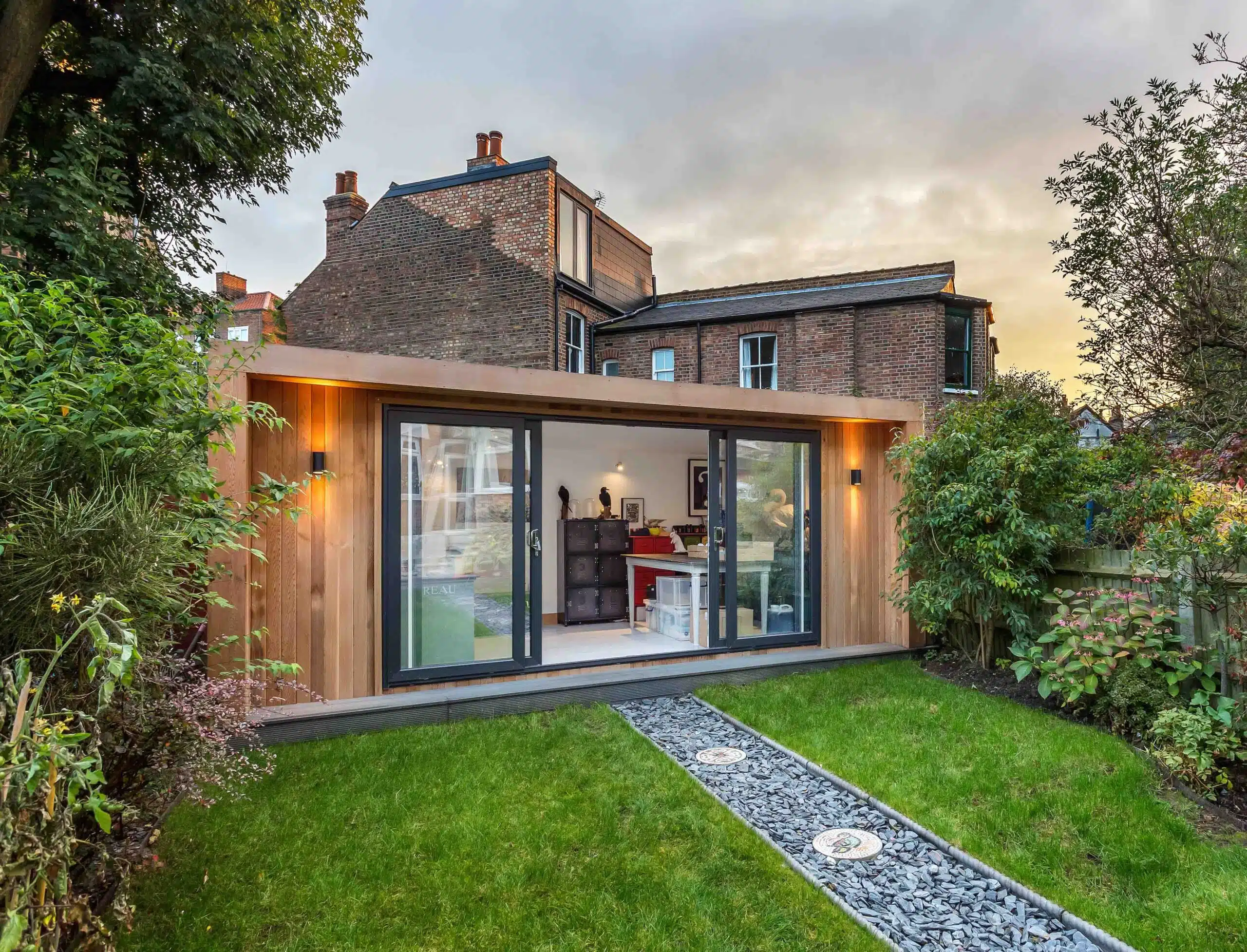
With the rising cost of living, a growing housing market, and the boom in remote working, more and more people in the UK are looking at their back gardens as a solution for extra living space. Whether you want to create an independent annex for an aging parent, a cozy guest house, or a stylish self-contained studio for yourself, one big question always comes up:
Can I legally live in a garden lodge permanently?
The short answer is: Usually, no—not without planning permission.
While the rules surrounding garden buildings can be surprisingly generous, permanent residential use falls into a different legal category altogether. Here is a breakdown of how Permitted Development rules work, why you can’t just move into a standard garden room, and how you might still achieve your dream.
What are Permitted Development (PD) Rights?
Permitted Development rights allow homeowners to build extensions, outbuildings, and make certain alterations to their properties without the need to apply for full planning permission.
For a garden lodge or outbuilding to fall under Permitted Development, it must meet a strict checklist. Generally, it must:
- Be single-storey with a maximum eaves height of 2.5 metres and a maximum overall height of 4 metres (for dual-pitched roofs) or 3 metres (for any other roof).
- Be located at least 2 metres from the boundary of the property (if the total height exceeds 2.5 metres).
- Cover no more than 50% of the land around the “original house.”
- Not be used for self-contained living accommodation or as a primary residence.
That last bullet point is the catch.
The Crucial Distinction: “Incidental” vs. “Primary” Use
Under current UK planning laws, outbuildings built under Permitted Development must only be used for purposes “incidental to the enjoyment of the dwellinghouse.”
What does “incidental” mean? It means activities that support the main house. Examples include:
- A home office or study
- A gym or yoga studio
- A hobby room, art studio, or games room
- A shed or storage space
What does it not include? Self-contained living. The moment a garden building includes the core facilities required for independent day-to-day living—such as a permanent bed, a kitchen/cooking facilities, and a bathroom—it crosses the line from an “incidental” outbuilding into a “separate dwelling.”
Even if you are just using it as a teenage retreat or a guest room for friends, if someone sleeps there continuously or treats it as an independent home, it technically breaches Permitted Development rules.
What Happens if You Live in One Anyway?
Some people are tempted to build a luxury garden lodge, hook up the utilities, and move in quietly. However, doing so without the correct permissions is a gamble.
Local planning authorities (LPAs) take unauthorized residential use seriously. If a neighbour complains or the council discovers the building is being used as a permanent, independent residence, they can issue an Enforcement Notice. This legally requires you to stop using the building as a dwelling and potentially rip out kitchens, bathrooms, or even demolish the structure entirely.
(Note: There is a 4-year rule for operational development and a 10-year rule for changes of use under older laws, though recent planning reforms have shifted enforcement timelines. Regardless, relying on “getting away with it” is a stressful and expensive risk.)
Can You Ever Live Permanently in a Garden Lodge?
Yes, but you will almost certainly need full planning permission.
If your goal is to build a permanent, self-contained garden lodge for someone to live in full-time (often called a “granny annex”), you must submit a Full Planning Application to your local council.
When reviewing your application, the council will look at several factors:
- Dependency: Councils are often more sympathetic to “granny annexes” if the occupant is a dependent relative (like an elderly parent) who shares utilities, garden space, and communal areas with the main house, rather than a completely independent tenant paying rent.
- Overdevelopment: Does the lodge take up too much garden space? Does it overlook neighbours and impact their privacy?
- Infrastructure: Can your property’s drainage, parking, and access handle additional permanent residents?
- Local Policy: Some local authorities have specific policies regarding residential annexes and rural development.
Tips for Success If You Want to Apply for Planning Permission
If you want to go down the legal route and get planning permission for a residential garden lodge, keep these tips in mind:
- Keep it connected: Design the lodge so it clearly functions as an annex to the main house rather than a totally separate property. Sharing a driveway, utility meters, and garden access helps prove it is not a standalone dwelling.
- Consult an architect or planning expert: Navigating building regulations and planning policy is tricky. A professional who has experience with garden annexes in your local area will greatly increase your chances of approval.
- Check Building Regulations: Even if you manage to bypass planning permission for certain structures, Building Regulations approval is almost always required if someone is going to sleep in the building. This ensures the structure is properly insulated, structurally sound, fire-safe, and has adequate ventilation and drainage.
Can you live in a garden lodge permanently in the UK?
Under Permitted Development rules, the answer is no. Garden buildings created without planning permission cannot be used as independent, permanent living quarters.
However, by applying for Full Planning Permission and Building Regulations approval, many homeowners successfully build beautiful, legal garden annexes for family members. If you are considering this path, always speak to your local council’s planning department or a qualified planning consultant before laying a single brick.