
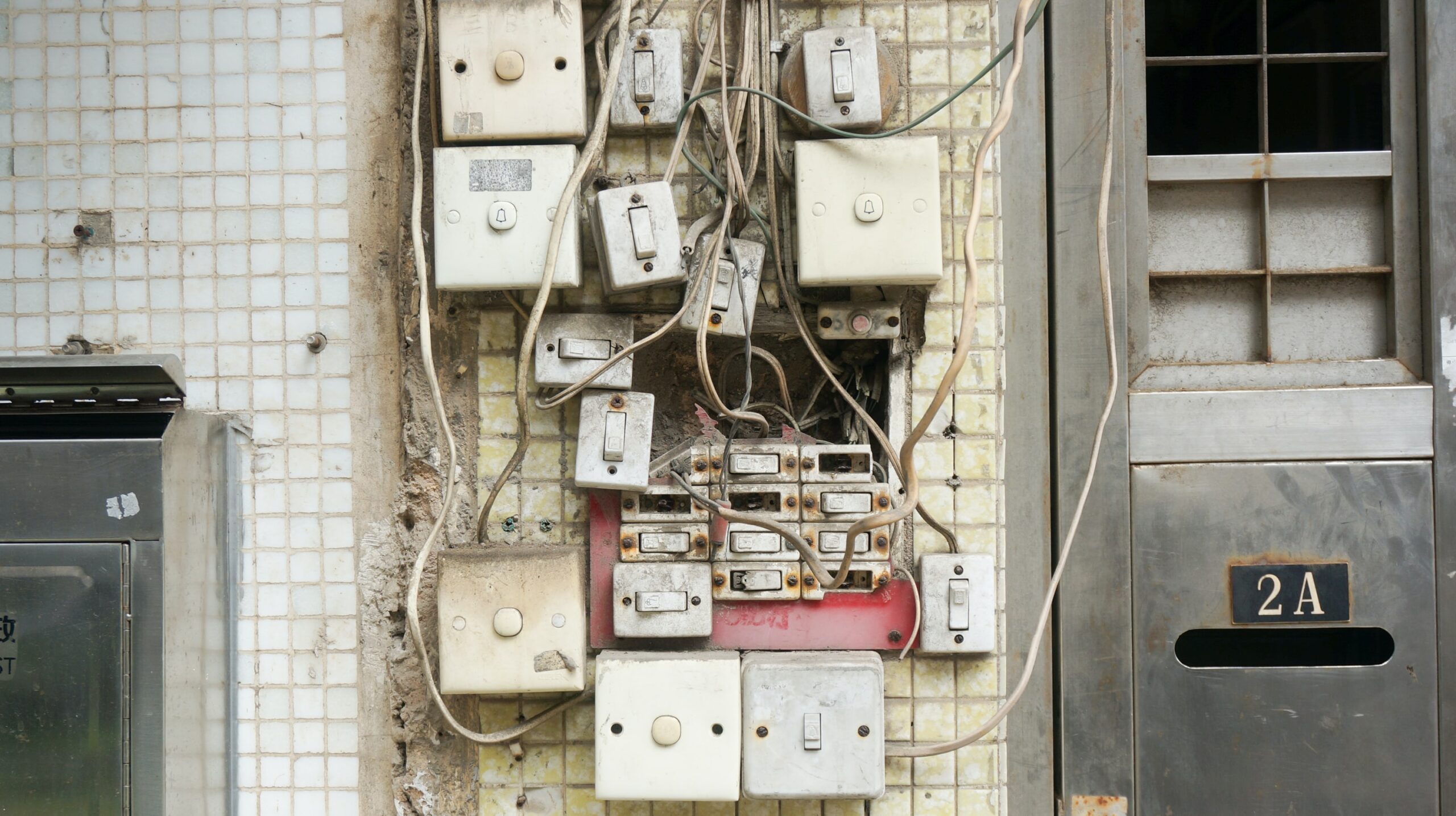
If you’ve just bought a charming Victorian terrace, a 1930s semi‑detached, or a Grade‑II listed cottage, you’ve probably fallen in love with the period details—high ceilings, sash windows, original cornices. But behind those beautiful features many older properties hide a less‑appealing secret: outdated, unsafe, or simply inadequate electrical installations.
In this post we’ll walk you through why upgrading the wiring in an old UK home is essential, what the current safety standards demand, and step‑by‑step guidance on how to bring your electrics into the 21st century—without compromising the character that made you fall in love in the first place.
1. Why Old Wiring Needs a Refresh
| Common Issue | What It Looks Like | Why It’s a Problem |
|---|---|---|
| Knob‑and‑tube (K&T) wiring | Exposed ceramic tubes with metal conductors, often visible in walls or under floorboards | No earth/ground, high fire risk, not compatible with modern accessories |
| Rubber‑sheathed or cloth‑insulated cables | Thick, black or grey rubber or cloth covering | Deteriorates over time, can become brittle, lacks adequate insulation |
| Fused spares or “old‑style” fuse boxes | Small porcelain or metal fuses, no RCD (Residual Current Device) | No protection against earth leakage, can leave you without power for long periods |
| Inadequate earthing/grounding | Bare copper wires or missing earth rods | Increases risk of electric shock, especially for appliances with metal cases |
| Undersized circuits | 2‑mm² cables feeding high‑power loads (e.g., cooker, electric shower) | Overloads lead to overheating, tripped breakers, or fire |
The Bottom Line
Even if the lights still work, the wiring may be a ticking time‑bomb. Updating the system improves safety, reliability, and resale value—plus it gives you the freedom to install modern conveniences like electric cars, smart thermostats, and high‑efficiency LED lighting.
2. The Legal Framework: What the Regulations Say
| Regulation | What It Covers | How It Affects Old Homes |
|---|---|---|
| BS 7671 – The IET Wiring Regulations (18th Edition) | All aspects of wiring design, installation, testing, and inspection | Sets the minimum standards for new work; any alterations to existing circuits must comply |
| Building Regulations Part P (England & Wales) | Electrical safety in dwellings | Any work in a consumer unit or new circuits requires a notifiable submission unless done by a registered electrician |
| Electrical Safety First – Practical Guidance | Best‑practice recommendations for homeowners | Offers handy checklists (e.g., “Check the Consumer Unit annually”) |
| Electricity at Work Regulations 1989 | Duty of care for anyone working with electrical systems | Relevant for DIYers – you must have proper training and risk assessments |
| Scottish & Northern Irish equivalents | Slight variations (e.g., Scottish Building Standards) | Same fundamental safety objectives, but consult local councils for specifics |
Quick tip: If you’re unsure whether a piece of work is notifiable, ask your installer to confirm. It’s far cheaper (and safer) to get the paperwork right the first time than to face a costly remedial inspection later.
3. Assessing the Current State of Your Wiring
- Visual Inspection
- Open the consumer unit (fuse box). Look for old DIN rails, split‑load fuses, or missing earth terminals.
- Peek behind radiators, under floorboards, or inside ceiling voids. If you see cloth or rubber‑sheath, it’s likely pre‑1970s.
- Age Guessing
- Pre‑1930s – Predominantly K&T or copper‑conduit.
- 1930s‑1960s – Rubber‑sheathed or PVC‑sheathed but often ungrounded.
- 1970s‑1990s – Early PVC with fused spares; may already have an RCD but not always compliant.
- Functional Tests (by a qualified electrician)
- Continuity & earth loop impedance – Checks if protective earth works.
- Insulation resistance – Identifies deteriorated insulation.
- RCD testing – Ensures trip times are within 0.1–0.2 seconds at 30 mA.
- Documentation Review
- Look for any existing Electrical Installation Condition Report (EICR). If none exists, request one—many lenders require it before a mortgage is finalized.
4. The Upgrade Blueprint: What Should You Replace?
| Element | Recommended Action | Why |
|---|---|---|
| Consumer Unit | Install a modern 6‑way or 12‑way unit with RCBOs (combined RCD + circuit breaker) or RCD‑protected MCBs. | Provides individual fault protection, easier fault isolation, and future‑proofing for EV chargers. |
| Earthing System | Add or replace earth rods, bonding, and the protective earth conductor (minimum 16 mm² for a typical domestic install). | Reduces shock risk, fulfills Part P. |
| Cable Types | Replace K&T and rubber‑sheathed cables with PVC‑sheathed twin and earth (T&E) (typically 2.5 mm² for sockets, 4 mm² for lighting). | Better insulation, fire‑resistant, supports higher loads. |
| Sockets & Switches | Fit BS 1363 13 A sockets with RCD protection; replace any two‑pole switches with shuttered modern units. | Meets current safety standards, prevents accidental contact. |
| Lighting | Switch to LED fixtures and cable management (e.g., surface‑mounted trunking) to avoid digging up historic plaster. | Low power draw, lower heat, compatible with dimmers and smart controls. |
| Dedicated Circuits | Add separate circuits for high‑draw appliances (electric shower, cooker, washing machine). | Avoids over‑loading a single ring final. |
| Smart Integration | Install home automation hubs (e.g., Zigbee, Z‑Wave) on dedicated, isolated circuits. | Future‑proofs the home for IoT devices. |
5. Step‑by‑Step: How a Typical Upgrade Proceeds
The following outline assumes you’ve hired a registered electrician (or a Competent Person Scheme member).
- Pre‑Work Survey & EICR
- The electrician inspects, photographs, and produces an Electrical Installation Condition Report plus a Quote/Scope of Work.
- Planning & Notifying
- If the work is notifiable, the electrician submits a Building Notice to the local council (or self‑certifies if they’re eligible).
- Isolation & Safety
- All existing circuits are isolated; a temporary lighting system may be installed for the duration of the work.
- Consumer Unit Replacement
- Old unit is removed, new unit mounted, and circuits re‑connected to appropriate RCBOs.
- Cable Removal & Replacement
- Old wiring is carefully extracted (often using minimally invasive methods like keyhole drilling) and new T&E cable is laid.
- Earthing & Bonding
- New earth conductors are run, earth rods are driven if required, and all metal services (gas, water, drainage) are bonded.
- Socket & Switch Fitting
- New sockets are installed, with shuttered front plates; any old two‑pole switches are swapped for single‑pole type.
- Testing & Certification
- Full BS 7671 testing (continuity, insulation resistance, RCD verification).
- A Certificate of Compliance (EICR) and a Minor Works Notifier Completion Certificate (if applicable) are issued.
- Client Handover
- The electrician explains the new consumer unit layout, provides user manuals, and outlines a maintenance schedule (e.g., test RCDs every 6 months).
6. Cost Estimates: What Should You Budget?
| Item | Typical Cost (GBP) | Factors Influencing Price |
|---|---|---|
| EICR Survey | £150‑£300 | Size of property, accessibility |
| Consumer Unit Upgrade | £500‑£1,200 | Number of circuits, brand (e.g., Hager, Schneider) |
| Re‑wiring (per room) | £800‑£1,600 | Floor type (solid, suspended), wall finish |
| New Sockets & Switches | £30‑£70 each | Designer vs standard, smart modules |
| Earthing & Bonding | £200‑£500 | Soil conditions, length of earth conductor |
| Testing & Certification | £100‑£200 | Complexity of the installation |
| Total for a 3‑bedroom terraced house | £4,000‑£8,500 | Includes labour, materials, and disposal fees |
Tip: Obtain at least three quotes and ask each electrician to break down labour vs material. Beware of unusually low offers— they often hide hidden costs (e.g., “additional charge for accessing behind plaster”).
7. DIY vs Professional: Where to Draw the Line
| Task | DIY‑Friendly? | Why You Might Need a Pro |
|---|---|---|
| Replacing a single, accessible socket | ✔ (if you hold a BS 7671 level 2 or 3 qualification) | Ensure proper earthing & compliance |
| Installing a light fitting | ✔ (simple pendant or downlight) | Check load rating and RCD compatibility |
| Running new cable through walls or ceilings | ✖ (structural work, fire‑rating concerns) | Must meet Building Regulation standards |
| Consumer unit replacement | ✖ (high‑risk, notifiable) | Must be registered and notifiable |
| Adding a dedicated EV charger circuit | ✖ (high current, special earthing) | Requires design, load calculations, and certification |
Bottom line: If the work involves any alteration to the consumer unit, new circuits, or earthing, you must use a registered electrician. Even simple socket swaps should be checked by a professional if you’re not fully confident.
8. Preserving Character While Modernising
- Surface‑Mounted Trunking: Paint‑able PVC trunking can run along walls without cutting into original plaster.
- Recessed LED Modules: Slim LED strips fit into period cornices, preserving the aesthetic.
- Period‑Style Switches: Many manufacturers supply replica Victorian or Art Deco switches that meet modern safety standards.
- Concealed Wiring: Where possible, route cables under floorboards or behind skirting boards— the work can be reversible, an important consideration for listed properties.
Consult your local council’s conservation officer if the building is listed; they often have guidance on acceptable methods of electrics work.
9. Frequently Asked Questions
Q1. Do I need an EICR every time I upgrade?
Yes. After any significant alteration (new consumer unit, new circuits, major re‑wiring) a new EICR must be issued.
Q2. What’s the difference between an RCD and an RCBO?
- RCD (Residual Current Device) protects all circuits downstream from a single point.
- RCBO (Residual Current Circuit Breaker with Over‑current protection) combines RCD and MCB protection per circuit, allowing you to isolate a fault without cutting power to the whole house.
Q3. Can I keep my old fuse box for nostalgia?
You could keep it as a decorative piece, but it must be isolated from the active supply. Legally, the house must have a compliant consumer unit for everyday use.
Q4. How often should I test my RCDs?
At least every 6 months using the test button; a professional test (using a residual current tester) is recommended annually.
Q5. Will upgrading the wiring affect my home insurance?
Most insurers require proof of compliance (EICR, certification) for coverage. An outdated system can lead to higher premiums or even a refusal to insure.
10. Final Thoughts
Old UK homes are a treasure trove of history, charm, and (sometimes) electrical hazards. By systematically assessing, upgrading, and certifying the wiring, you not only safeguard your family and property but also future‑proof the dwelling for modern comforts—from electric cars to smart lighting.
Takeaway: Never compromise on safety for the sake of “keeping it original.” The good news is that contemporary solutions—compact consumer units, discreet trunking, period‑style accessories—allow you to honour the past while embracing the present.
If you’re ready to start the journey, the first step is simple: book a qualified electrician for an EICR. From there, a clear plan and a realistic budget will set you on the road to a safer, more efficient home that still tells its historic story.
Got questions or want to share your own upgrade experience? Drop a comment below or subscribe for more UK‑focused home‑improvement guides. Happy wiring!