
The UK is rapidly moving towards decarbonizing its heating sector, and heat pumps are central to this transition. These devices use electricity to move thermal energy from a cooler place to a warmer place, effectively “pumping” heat from outside into a home. They are highly efficient, typically producing two to four units of heat for every unit of electricity consumed.
However, navigating the choice between an Air Source Heat Pump (ASHP) and a Ground Source Heat Pump (GSHP) in the diverse British climate requires a detailed comparison of their performance, installation requirements, and running costs.
1. Air Source Heat Pumps (ASHPs)
ASHP technology is the more common and generally simpler option for UK homes.
How They Work
ASHPs absorb heat from the outside air and transfer it into the home’s heating system (radiators or underfloor heating) and hot water tank.

Pros for the UK Climate:
- Installation Simplicity: Installation is less disruptive and costly than GSHP, often taking just a few days. They require only a small outdoor unit, making them suitable for typical terraced or semi-detached UK houses with limited garden space.
- Lower Upfront Cost: ASHPs are significantly cheaper to buy and install, making them accessible to a wider range of homeowners.
- Decent Performance: Modern units are designed to operate efficiently even in low temperatures. While their efficiency (COP) drops as the outside temperature falls (e.g., below freezing), they can still function effectively down to about -15*C, which is sufficient for almost all UK winters.
Cons for the UK Climate:
- Efficiency Fluctuation: Performance is directly tied to the ambient air temperature. On the coldest winter days, when heating demand is highest, the unit’s efficiency is at its lowest, potentially relying more on a backup electric element.
- Noise: The outdoor unit contains a fan, which produces some noise, a potential issue in densely packed urban or suburban areas.
- Aesthetics: The visible outdoor unit may be a visual concern for some properties.
2. Ground Source Heat Pumps (GSHPs)
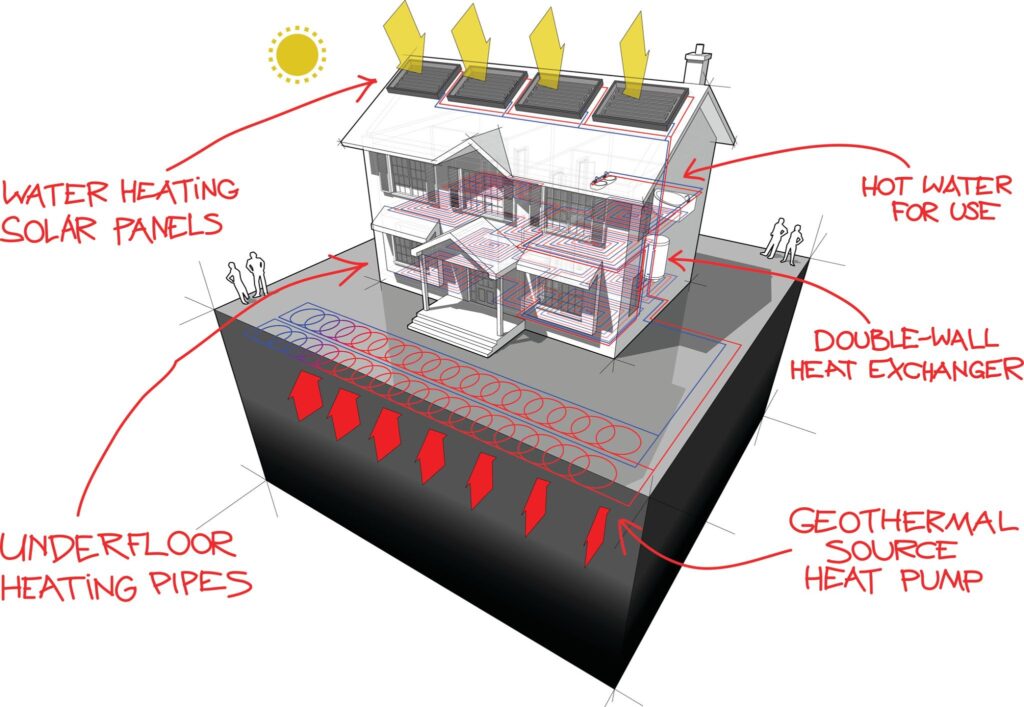
GSHPs draw heat from the Earth, which maintains a more stable temperature year-round than the air.
How They Work
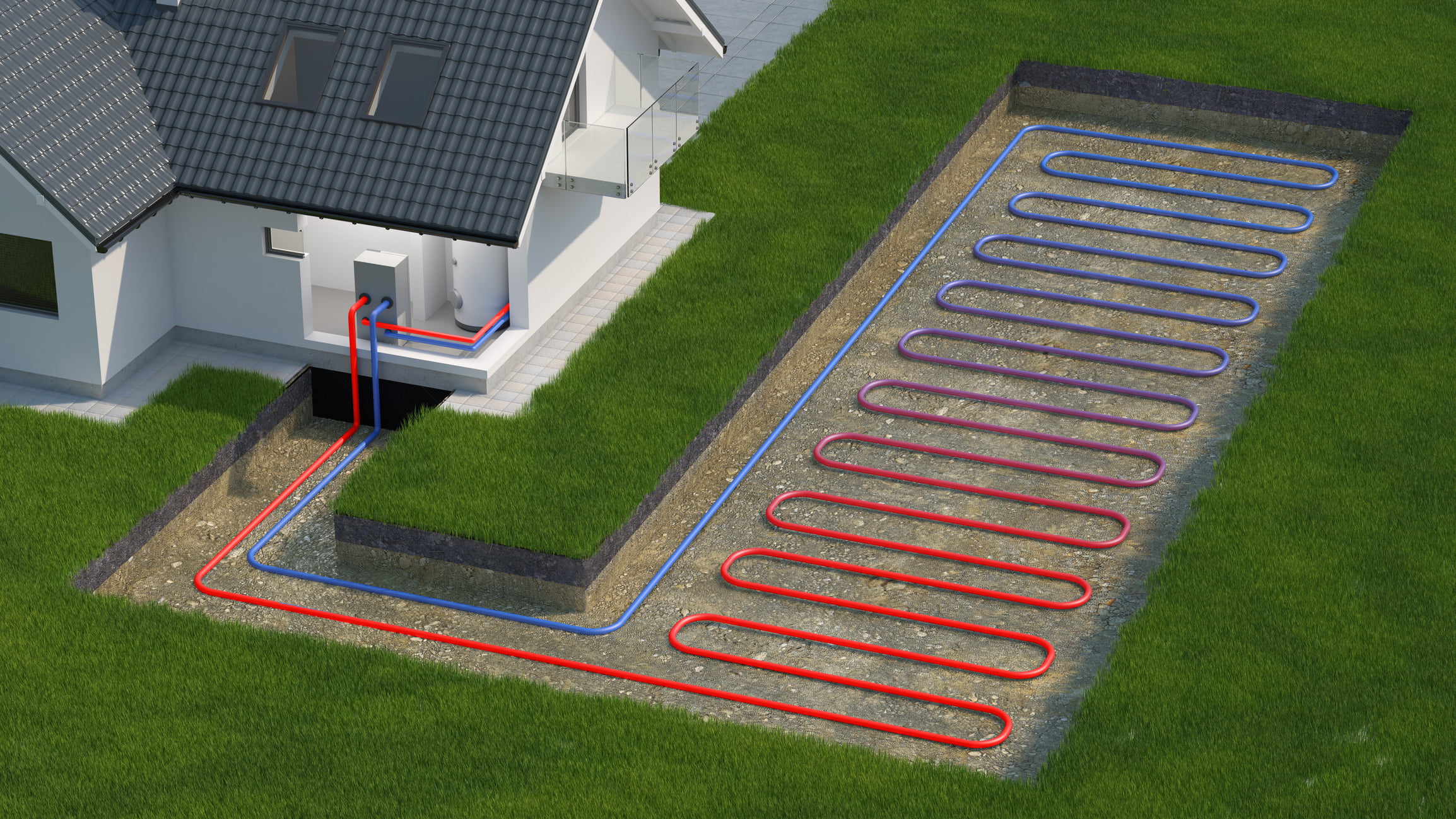
GSHPs circulate a fluid through underground pipework (ground loops), absorbing heat from the ground. The system then compresses this heat and transfers it indoors.
Pros for the UK Climate:
- Superior Stability and Efficiency: The ground temperature in the UK remains relatively stable (around 8*C to 12*C) even when the air temperature is freezing. This provides a constant, warmer heat source, resulting in a significantly higher and more consistent Seasonal Coefficient of Performance (SCOP) throughout the year.
- Lower Running Costs: Due to their consistently high efficiency, GSHPs typically have lower long-term running costs than ASHPs.
- Longer Lifespan: The indoor unit and underground pipework have a very long operational life, often exceeding 50 years for the ground loops.
Cons for the UK Climate:
- High Upfront Cost and Disruption: Installation is highly expensive and requires significant groundwork. This involves digging horizontal trenches (requiring a large garden) or drilling vertical boreholes (expensive but suitable for smaller plots). This extensive work makes GSHPs unsuitable for many urban UK properties.
- Planning Permission: Boreholes may require specific planning permission or adherence to water-related regulations.
- Complexity: The design of the ground loop array must be precisely matched to the heat demand of the house and the thermal properties of the soil.
3. Comparison in the UK Context
| Feature | Air Source Heat Pump (ASHP) | Ground Source Heat Pump (GSHP) |
| Upfront Cost | Lower (£8,000 – £18,000) | Higher (£18,000 – £45,000+) |
| Installation | Quick (2-5 days), low disruption. Requires space for an outdoor unit. | Slow (weeks), highly disruptive groundwork. Requires significant land area or borehole drilling. |
| Running Efficiency (COP) | Variable, drops significantly in cold weather. | Stable and high, virtually unaffected by external air temperature. |
| Space Required | Minimal (small outdoor fan unit). | Extensive land (horizontal loops) or specialized drilling (vertical loops). |
| Noise | Moderate (from the outdoor fan). | Minimal (all heat collection is silent underground). |
| Best Suited For | Well-insulated average UK homes, especially in urban/suburban settings. | Large, detached properties with extensive garden or land access. |
For the vast majority of UK homeowners, especially those in densely populated areas, the Air Source Heat Pump (ASHP) is the most practical and financially viable option. Its lower upfront cost, simpler installation, and adequate performance in the typically mild British climate make it the default choice for domestic decarbonization.
Ground Source Heat Pumps (GSHPs) represent the peak of efficiency and are the preferred solution for new-build or large, rural properties where land is abundant and the priority is maximum efficiency and lowest long-term running costs.