
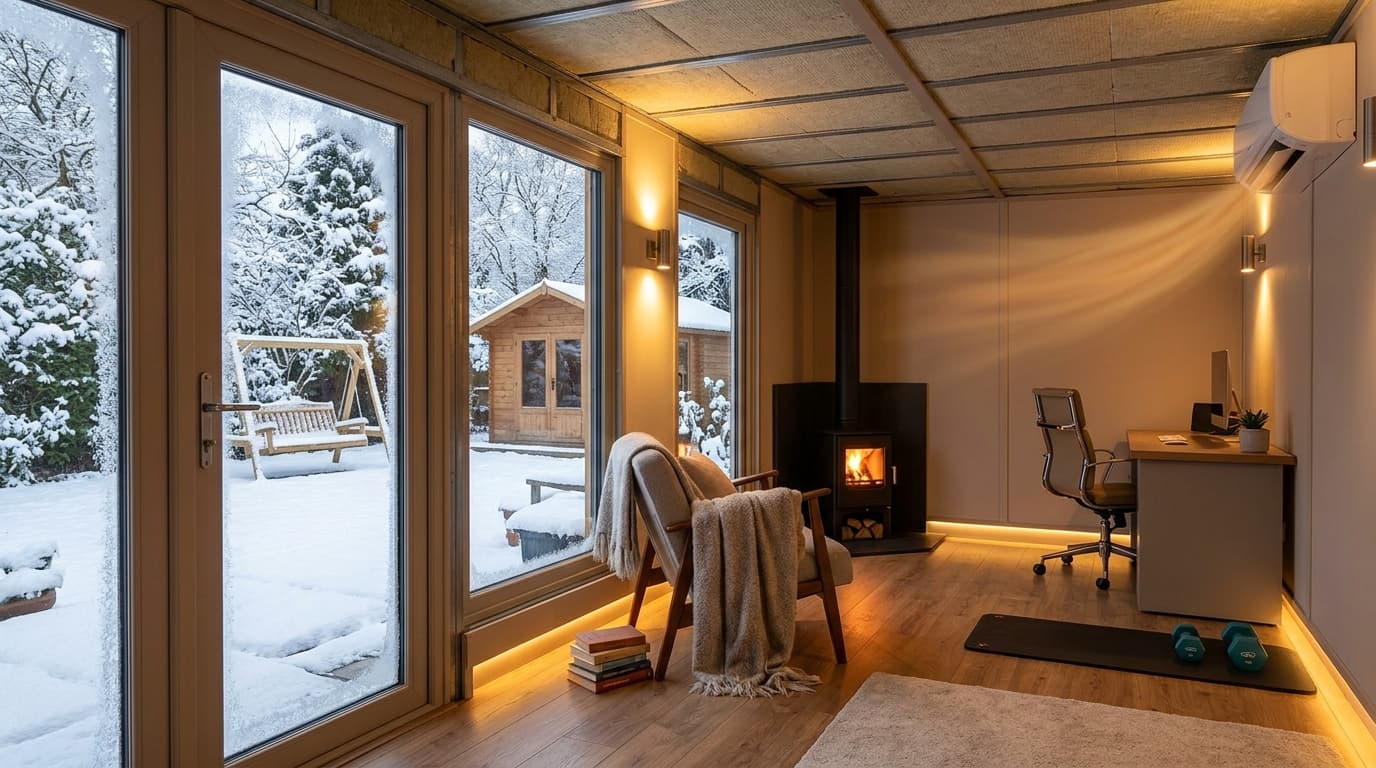
There’s something magical about a garden room. In the spring and summer, it’s your sanctuary, home office, or creative studio bathed in natural light. But as the UK weather takes its inevitable turn toward biting winds, frost, and grey skies, the big question arises: How do you keep it warm when winter arrives?
Without proper insulation and heating, a garden room can quickly transform from a cosy retreat into an icebox.
If you want to use your garden room 365 days a year without wearing three jumpers and fingerless gloves, you need the right heating solution. Here is a breakdown of the best garden room heating options for UK winters, weighing up efficiency, cost, and comfort.
Electric Panel Heaters (The Modern Classic)
Electric panel heaters are one of the most popular choices for garden rooms, and for good reason. Modern versions are sleek, wall-mounted, and take up virtually no floor space.
- How they work: They draw in cold air from the bottom, pass it over a heating element, and circulate warm air into the room.
- Pros: They are relatively inexpensive to buy and install (many just plug into a standard socket, though a fused spur wired by an electrician is safer for long-term use). They also heat up a room very quickly.
- Cons: Electricity in the UK is currently expensive, meaning running these on high for hours at a time can result in a hefty energy bill if your room isn’t well insulated.
- Best for: Occasional users who need quick heat for a few hours at a time. Tip: Look for models with built-in thermostats and 24/7 timers so you aren’t heating an empty room.
Infrared Panel Heaters (The Sun-Ray Sensation)
If you haven’t considered infrared heating yet, it’s worth a look. Instead of heating the air in the room, infrared panels heat the objects and people directly—much like the feeling of standing in winter sunshine.
- How they work: They emit infrared waves that warm surfaces, which then gently release heat back into the space.
- Pros: Highly energy-efficient compared to convection heaters because no energy is wasted heating empty air. They can be mounted on walls or even the ceiling, freeing up valuable space. They also prevent dampness by keeping the walls warm.
- Cons: They only heat what they are “looking at.” If you sit behind a desk and block the panel, you might feel a bit cooler.
- Best for: Home offices where you sit in a fixed position for long stretches and want a consistent, gentle warmth.
Air Source Heat Pumps (The Ultimate Efficiency)
If you use your garden room every single day as a primary workspace or gym, an air-source heat pump (often called a split-system air conditioner) is the gold standard.
- How they work: They extract heat from the outside air (even when it’s freezing outside) and transfer it indoors.
- Pros: Incredibly cheap to run compared to standard electric heating—often producing three to four times more heat energy than the electrical energy they consume. Crucially, they also provide air conditioning in the summer, making them a true year-round climate control solution.
- Cons: They have a higher upfront cost and require professional installation. They also require an outdoor unit to be mounted on the side of your garden room.
- Best for: Daily, heavy usage and those looking for long-term energy savings and summer cooling.
Underfloor Heating (The Luxury Choice)
There is nothing quite like stepping onto a warm floor on a freezing January morning. Underfloor heating delivers luxurious, even heat from the ground up.
- How they work: Usually electric mat systems for garden rooms, these are laid beneath your flooring (laminate, vinyl, or engineered wood) and gently radiate heat upward.
- Pros: Completely invisible (zero wall or floor space used) and provides the most comfortable distribution of heat. It stops cold spots entirely.
- Cons: It can be slow to heat up a room from scratch, and it requires careful planning during the build phase. You also need to ensure your flooring choice is compatible with underfloor heating.
- Best for: Yoga studios, lounge spaces, or anyone who prioritises comfort and aesthetics. (Best paired with a secondary quick-heat source like a panel heater).
Wood-Burning Stoves (The Cosy Aesthetic)
For sheer romance and atmosphere, nothing beats a real wood-burner. There is a booming trend of installing miniature wood stoves in UK garden rooms.
- How they work: They burn seasoned wood or approved briquettes, radiating intense, ambient heat.
- Pros: They create an unbeatable, cosy aesthetic and don’t rely on electricity at all. Perfect if you want a rustic vibe.
- Cons: They require a professional flue installation through the roof or wall to meet building regulations, take up valuable floor space, require fuel storage, and need regular cleaning. They can also overheat a small, well-insulated garden room very quickly.
- Best for: Garden rooms used as weekend relaxing spaces, hobby rooms, or garden pubs where ambiance is everything.
Don’t Forget the Foundation: Insulation is Key!
No matter which heating system you choose, it will only work as well as your insulation.
Many cheaper summerhouses or sheds leak heat like a sieve. If you want a usable winter garden room, make sure it features:
- Double or triple-glazed windows and doors.
- Insulation in the walls, floor, and roof (such as PIR boards like Celotex or Kingspan).
- A proper damp-proof membrane.
Which should you choose?
- On a budget / Casual user: Go for a modern electric panel heater with a timer.
- For a home office: An infrared panel will keep you toasty without breaking the bank.
- For daily, heavy use / All-in-one comfort: Invest in an air-source heat pump for ultimate efficiency and summer cooling.
With the right setup, your garden room won’t just be a seasonal bonus—it will become your favourite room in the house, even when the British winter is at its worst.