
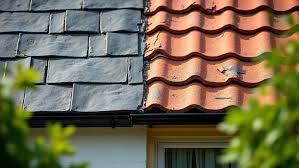
When it comes to roofing, “beauty meets durability” is the mantra most homeowners live by. Two of the most timeless, high‑end options on the market are slate and natural (clay or concrete) tile. Both have been used for centuries, they age gracefully, and each brings a distinct personality to a home’s curb appeal.
But which one is right for your climate, budget, and design vision? In this post we’ll break down every factor that matters—price, lifespan, installation, maintenance, energy efficiency, and more—so you can make an informed decision without the guesswork.
1. Quick‑Look Comparison
| Feature | Slate | Natural Tile (Clay / Concrete) |
|---|---|---|
| Typical lifespan | 75‑200+ years (often “forever”) | 50‑100 years (clay) / 30‑50 years (concrete) |
| Weight | 800‑1,500 lbs per sq. ft (very heavy) | 600‑1,200 lbs per sq. ft (moderately heavy) |
| Installation | Requires skilled slate‑roofers; more labor‑intensive | Tile installers needed; slightly faster than slate |
| Cost (materials only) | $10‑$30+/sq. ft | $7‑$25+/sq. ft (clay) ; $6‑$15+/sq. ft (concrete) |
| Design flexibility | Natural color variations, beveled edges, custom cuts | Wide palette of colors, shapes (Spanish, Mission, French, etc.) |
| Fire resistance | Class A (non‑combustible) | Class A (non‑combustible) |
| Eco‑friendliness | Natural stone, low embodied energy | Clay: natural, high embodied energy; Concrete: higher CO₂ |
| Typical climate suitability | Cold, wet, windy climates (excellent water shedding) | Hot, dry, Mediterranean climates; good for solar reflectivity |
| Maintenance | Occasional replacement of cracked slates; minimal cleaning | Periodic cleaning of moss/algae; replace broken tiles |
Bottom line: Slate wins on longevity and sheer elegance; natural tile excels in heat‑deflection and design variety, often at a lower upfront cost.
2. Deep Dive: Slate Roofing
2.1 What Is Slate?
Slate is a fine‑grained metamorphic rock that splits into thin, flat sheets. Those sheets are quarried, trimmed, and nailed directly onto the roof deck. Because each slate piece is a natural stone, no two shingles look exactly alike—giving a roof an organic, handcrafted look.
2.2 Strengths
| Benefit | Why It Matters |
|---|---|
| Longevity | Properly installed slate roofs can last well over a century, often outliving the house itself. |
| Durability | Highly resistant to wind, hail, and impact; won’t crack under heavy snow loads if installed on a properly reinforced deck. |
| Water Resistance | Slate’s low water absorption means it sheds water quickly, reducing leaks. |
| Fire Rating | Naturally fire‑proof (Class A). |
| Low Maintenance | Aside from occasional cracked slates, there is little to clean—no algae growth like on asphalt. |
| Eco‑friendly | Natural stone with minimal processing; recyclable at the end of its life. |
2.3 Drawbacks
| Issue | Mitigation |
|---|---|
| Weight | Requires reinforced roof structure or roof decking; consult a structural engineer. |
| Cost | Higher material and labor costs; treat as a long‑term investment. |
| Installation Complexity | Must be installed by a certified slate roofer; not a DIY job. |
| Limited Color Palette | Typically shades of gray, black, green, purple; limited bright colors. |
2.4 Ideal Scenarios for Slate
- Historic homes needing period‑accurate materials.
- Cold or wet climates where water shedding and snow load resistance are essential.
- Homeowners who value longevity and are willing to invest upfront for a roof that may never need replacement.
3. Deep Dive: Natural Tile Roofing
Natural tile comes in two main flavors:
| Type | Composition | Typical Use |
|---|---|---|
| Clay Tile | Fired natural clay (often glazed) | Mediterranean, Spanish, southwestern styles |
| Concrete Tile | Cement, sand, and pigments molded & cured | More versatile, cheaper option for many styles |
3.1 Strengths
| Benefit | Why It Matters |
|---|---|
| Aesthetic Variety | Hundreds of colors, profiles, and finishes (glazed, matte, terracotta). |
| Thermal Performance | High thermal mass reflects sunlight, keeping interiors cooler in hot climates. |
| Fire Rating | Class A fire resistance. |
| Durability | Resistant to rot, insects, and UV degradation. |
| Weight | Lighter than slate (especially concrete), easing structural requirements. |
| Cost‑Effective | Generally cheaper than slate, especially concrete tile. |
3.2 Drawbacks
| Issue | Mitigation |
|---|---|
| Porosity (clay) | Proper glazing and sealants reduce water absorption. |
| Brittle on Impact | Use high‑quality tiles; avoid falling debris or hail-prone areas. |
| Potential Moss/Algae | Regular roof cleaning, especially in humid climates. |
| Concrete Tile Carbon Footprint | Opt for high‑recycled‑content tiles or choose clay if sustainability is a priority. |
3.3 Ideal Scenarios for Natural Tile
- Hot, sunny regions (Southwest U.S., Mediterranean, coastal tropical) where heat reflection reduces cooling costs.
- Homes with Mediterranean, Spanish, or Mission architecture that demand the classic “terracotta” look.
- Projects where budget constraints still call for a premium, long‑lasting roof.
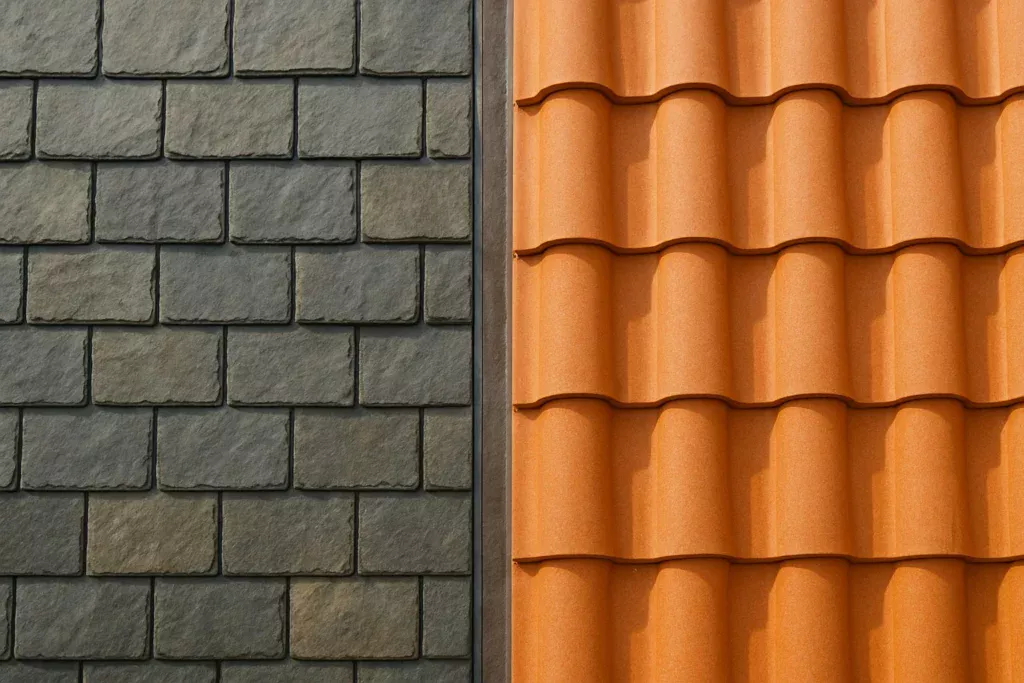
4. Decision‑Making Checklist
| Question | Slate | Natural Tile |
|---|---|---|
| What is my climate? | Cold, rainy, snowy | Hot, dry, sunny |
| Do I have structural capacity? | May need reinforcement | Usually fine as‑is |
| What’s my budget? | $10‑$30+/sq. ft (materials) + higher labor | $6‑$25+/sq. ft (materials) |
| How long do I plan to stay in the house? | 50+ years → slate makes sense | 30‑50 years → tile is solid |
| Do I care about sustainability? | Very low embodied energy | Choose clay for lower carbon; concrete higher but can be recycled |
| Do I want a historic or regional look? | Traditional, European, New England | Mediterranean, southwestern, modern rustic |
| Am I okay with higher upfront cost for lower future expense? | Yes | May prefer lower upfront cost even if replacement comes sooner |
Takeaway: If your roof is the centerpiece of a historic restoration, or you live in a region where heavy snow and wind are common, slate is the clear winner. If you’re building a modern “casa del sol” in Arizona, or you need a roof that helps keep the house cool, natural tile (especially glazed clay) will serve you better.
5. Cost Breakdown (2024 U.S. Averages)
| Item | Slate | Clay Tile | Concrete Tile |
|---|---|---|---|
| Materials per sq. ft | $10‑$30 | $7‑$20 | $6‑$15 |
| Labor per sq. ft | $8‑$12 | $5‑$9 | $5‑$9 |
| Roof Deck Reinforcement (if needed) | $1‑$3 | $0‑$2 | $0‑$2 |
| Total Installed Cost | $19‑$45 | $12‑$31 | $11‑$26 |
| Expected lifespan | 100‑200+ yr | 50‑100 yr | 30‑50 yr |
| Annualized cost (over lifespan) | $0.10‑$0.20 /yr | $0.24‑$0.62 /yr | $0.22‑$0.73 /yr |
These figures are averages; actual numbers vary by region, contractor, and roof complexity.
6. Maintenance & Longevity Tips
Slate
- Inspect after major storms – look for broken or slipped slates.
- Replace only the damaged slates – a “mix‑and‑match” repair keeps the roof intact.
- Keep gutters clean – water backing up can add weight and stress the slate.
Natural Tile
- Clean moss/algae using low‑pressure water or a roof‑safe cleaner every 5‑7 years.
- Check for cracked or broken tiles after hail. Replace promptly to avoid water infiltration.
- Seal the roof (especially for unglazed clay) every 10‑15 years to reduce porosity.
7. Sustainability Snapshot
| Metric | Slate | Clay Tile | Concrete Tile |
|---|---|---|---|
| Raw material extraction | Quarrying stone (moderate impact) | Clay mining (low‑moderate) | Cement production (high CO₂) |
| Manufacturing energy | Low (cutting, shaping) | High (firing kiln) | Moderate (mold & cure) |
| Recyclability | 100% recyclable as stone | Recyclable as aggregate | Recyclable as aggregate |
| Embodied carbon (kg CO₂e/m²) | 30‑70 | 80‑120 | 120‑180 |
| Longevity factor | 200+ years → low carbon over life | 75 years → moderate | 40 years → higher carbon per year |
If sustainability is your priority, slate edges out the competition because its low embodied carbon combined with a 200‑year lifespan results in the smallest carbon footprint per year of service.
8. Frequently Asked Questions
Q1. Can I install slate over an existing roof?
Yes, but only if the existing roof is in good condition and the structure can handle the added weight. A professional assessment is mandatory.
Q2. Do I need special underlayment with tile?
Both slate and tile benefit from a high‑quality synthetic underlayment (e.g., self‑adhesive roofing felt) to provide an extra moisture barrier.
Q3. How does snow load affect tile roofs?
Concrete and clay tiles can handle typical snow loads, but steep roofs are recommended in heavy‑snow regions. Slate’s higher strength makes it a safer choice for extreme snow.
Q4. Are roof warranties different?
Slate manufacturers often offer lifetime warranties on the material; tile manufacturers usually provide 20‑30‑year warranties. Labor warranties depend on the roofing contractor.
Q5. What about resale value?
Both materials boost curb appeal and resale value, but slate’s “never‑replace” reputation can add a premium of 5‑10% to a home’s market price, especially in historic districts.
9. Final Verdict: Which One Wins?
There is no one‑size‑fits‑all answer. Your choice should be guided by:
- Climate – Cold/wet → Slate; Hot/dry → Tile.
- Budget – Upfront cost vs. long‑term investment.
- Aesthetic vision – Historic stone vs. Mediterranean terracotta.
- Structural capacity – Verify load limits before committing.
- Sustainability goals – Slate offers the lowest annual carbon impact.
If you can afford the upfront expense and have the structural support, slate is the ultimate “set‑and‑forget” roof that can outlive your family. If you need a cool‑reflecting roof that still looks timeless, natural tile—especially glazed clay—delivers beauty, performance, and a more modest price tag.
10. Ready to Make a Decision?
Choosing the right roof is a blend of art and engineering. The best way to move forward is to:
- Schedule a professional roof assessment – structural engineer + roofing contractor.
- Collect samples – ask for a slate and a tile sample to see colors and textures in your own lighting.
- Get detailed quotes – include material, labor, and any reinforcement costs.
- Consider your long‑term plan – how many years you plan to stay, your resale goals, and your environmental values.
Your roof is the first line of defense for your home—choose wisely, and it will protect, beautify, and add value for decades to come.