
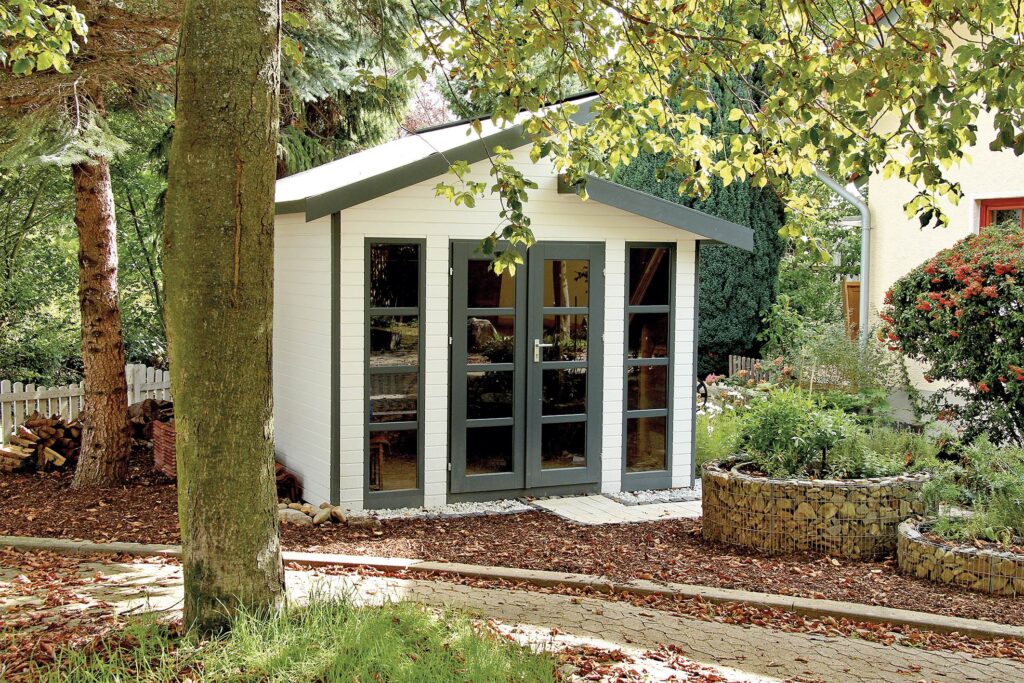
Picture this: You’ve finally decided to build your dream garden office. No more commuting to the kitchen table, no more listening to the washing machine spin while you’re on a client call. You’re ready to reclaim your productivity.
You’ve looked into Planning Permission (and likely realized that under Permitted Development rights, you probably don’t need it as long as it’s single-storey, under a certain height, and doesn’t take up more than 50% of your garden).
But then you hit the next big question: Do I need Building Regulations approval?
It’s one of the most common questions we get asked, and the answer isn’t a simple “yes” or “no.” It depends on the size of your build, how you plan to use it, and what’s inside it.
Let’s break it down so you can build with confidence (and without a visit from local enforcement).
The Short Answer
In many cases, no, a garden office does not need Building Regulations approval.
However, there are three major exceptions that can trigger the need for approval:
- Floor area: Is it bigger than 15 square meters?
- Sleeping accommodation: Will anyone actually be sleeping in it?
- Electrics and plumbing: Does it involve major electrical or drainage work?
Let’s look at these rules a bit closer.
The Size Rule (The 15m² and 30m² Thresholds)
Building Regulations treat outbuildings based primarily on their internal floor area:
- Under 15m²: Generally exempt from Building Regulations entirely (as long as it doesn’t contain sleeping quarters).
- Between 15m² and 30m²: Usually exempt only if the building is constructed largely of non-combustible materials (like brick or stone) and is placed at least 1 meter away from any boundary. If it’s made of timber and sits right up against your fence, you might need to look closer at the rules.
- Over 30m²: Almost always requires Building Regulations approval, regardless of what it’s made of or where it sits.
(Note: Most standard garden offices are around 10m² to 20m², so many fall into that grey middle ground.)
The Sleeping Quarters Rule
Are you hoping to use your garden office as a dual-purpose space—perhaps a home office by day and a guest bedroom by night?
Be careful. If your garden office contains any sleeping accommodation, the exemptions go out the window. Even a tiny 8m² shed-turned-bedroom will need Building Regulations approval because of fire safety, escape routes, and ventilation requirements.
What About Electrics and Plumbing?
This is where a lot of DIYers and buyers get tripped up.
Even if the structure of your garden office is exempt from Building Regulations, the services inside it might not be.
- Electrics (Part P): If you are running a new electrical circuit from your main house out to your garden office, this is notifiable work under Part P of the Building Regulations. You generally have two choices: use a certified electrician who can self-certify their work through a competent person scheme (like NICEIC), or submit a building notice to your local council and pay for an inspection.
- Plumbing and Drainage (Part H): If you’re adding a toilet, sink, or shower to your garden office, the drainage and water supply must comply with Building Regulations to ensure hygiene, prevent freezing, and avoid overloading existing systems.
What Happens If You Ignore Building Regs?
If your garden office requires Building Regulations approval and you don’t get it, the local council can serve an enforcement notice requiring you to alter or even demolish the building.
Furthermore, if you ever decide to sell your house, a savvy buyer’s solicitor will ask for Building Regulations certificates for any electrical work or outbuildings. Lacking them can delay or even kill a property sale.
How to Stay on the Right Side of the Law
- Check with your supplier: If you are buying a pre-fabricated or bespoke garden office, ask the company if their buildings comply with Building Regulations or if they offer assistance with the paperwork. Reputable companies know these rules inside and out.
- Use certified tradespeople: Always hire a registered electrician (Part P certified) to handle the power supply. They will handle the notification process for you and provide a certificate upon completion.
- Talk to your local council: If you are unsure—especially if your build is close to boundaries or sits near the 30m² mark—a quick call or email to your local council’s building control department can save you a world of trouble.
While many garden offices slip under the radar of Building Regulations, you shouldn’t assume yours is automatically exempt—especially if you’re installing mains electricity, plumbing, or building close to your property boundaries.
Do your research upfront, invest in certified professionals for the utilities, and you’ll soon be enjoying your new workspace with total peace of mind!