
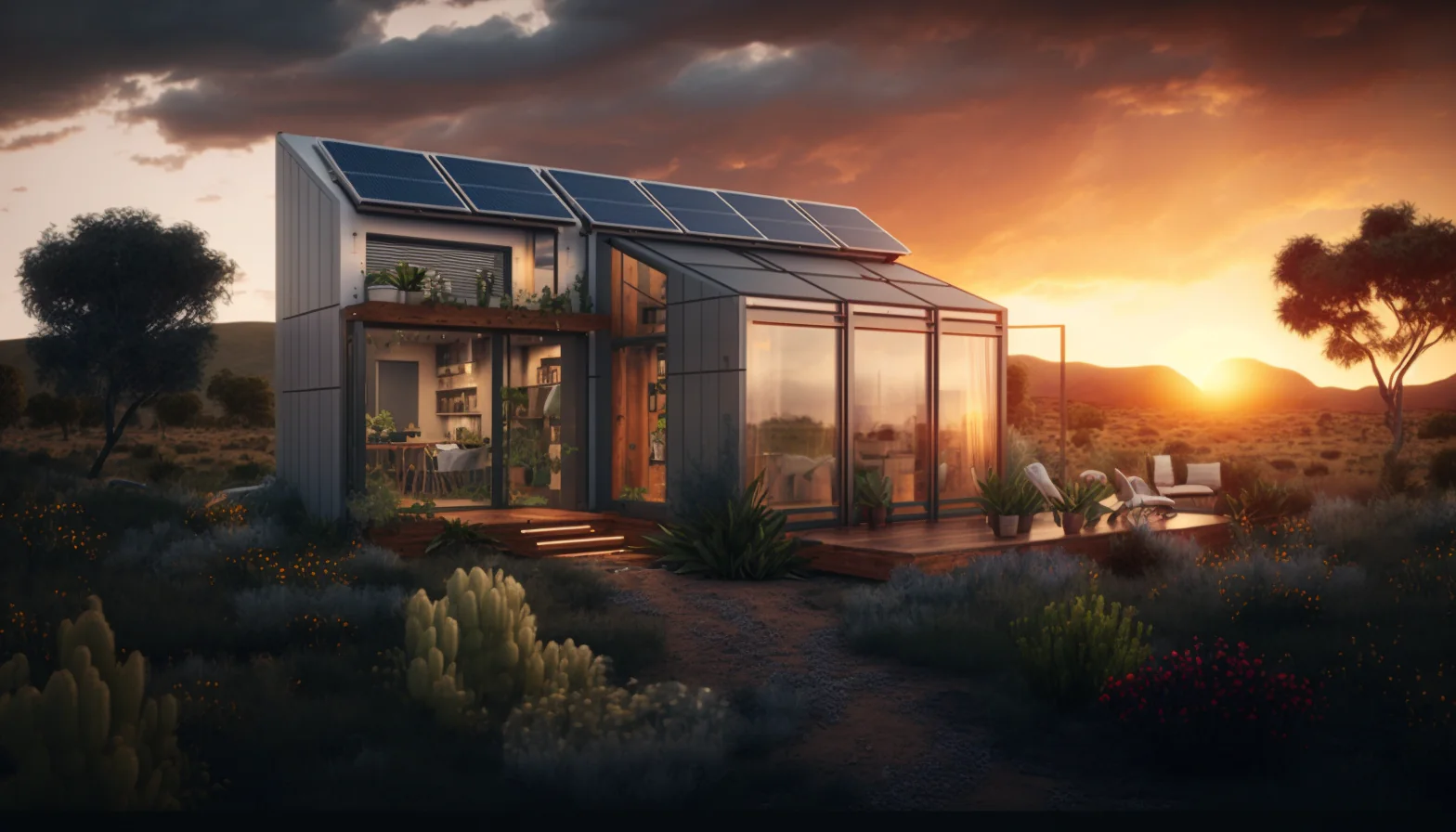
The appeal of living off‑grid has gone from fringe hobby to mainstream aspiration. With rising electricity bills, growing concerns over climate change, and an increasing desire for self‑sufficiency, more Britons are eyeing remote cottages, converted barns, and even purpose‑built tiny houses as their next home.
But “off‑grid” isn’t just a buzzword – it’s a concrete lifestyle that requires careful planning around three core utilities:
| Utility | Why It Matters | Typical UK Solution |
|---|---|---|
| Power | Keeps lights, appliances, heating and electric vehicles alive | Solar PV arrays + battery storage |
| Waste | Properly managing sewage is a legal requirement | Septic tanks / composting toilets |
| Water | Clean water is non‑negotiable for drinking, cooking and hygiene | Borehole / well + water treatment |
Below we break down each system, explain the UK‑specific rules you’ll face, and hand you a checklist to make the transition as smooth as possible.
1. Solar Panels – Harnessing the British Sun
1.1 How Much Sun Does the UK Actually Get?
Don’t be fooled by the stereotype of endless drizzle. The UK receives about 1,100 kWh/m² of solar irradiance per year, enough to power a modest home when paired with modern panels and batteries.
- South‑facing roofs receive the most energy (up to 1,200 kWh/m²).
- East‑west orientations can still deliver 80‑90 % of that output if you use bifacial or half‑cut cells.
- Shaded sites (trees, neighboring houses) can be mitigated with micro‑inverters and higher‑efficiency modules.
1.2 Sizing a System for a Typical UK Off‑Grid Home
| Household Need | Approx. kWh/yr | Recommended PV Size* |
|---|---|---|
| Single‑person cabin (basic appliances) | 1,200‑1,800 | 2–3 kW |
| Two‑person family (electric heating, fridge, EV charger) | 3,500‑5,000 | 5–6 kW |
| Large, insulated house with electric heating & hot water | 6,000‑9,000 | 8–10 kW |
*Assumes a 4‑hour “sun‑hours” average and 20‑year panel degradation of ~0.5 %/yr.
1.3 Battery Storage – The Real Off‑Grid Backbone
- Lithium‑ion (LiFePO₄): Highest energy density, 10‑15 years life, 85‑90 % round‑trip efficiency.
- Lead‑acid (AGM/gel): Cheaper upfront, but heavier, lower depth‑of‑discharge (DoD) and ~5‑7 years lifespan.
- Hybrid approach: Pair a small lithium pack for daily cycles with a larger lead‑acid bank for seasonal storage.
Rule of thumb: Size storage for 2–3 days of autonomy (e.g., 10 kWh for a 5 kW system) to handle UK’s frequent cloudy spells.
1.4 Legal & Planning Considerations
| Issue | What You Need to Do |
|---|---|
| Planning permission | Generally not required for rooftop PV under permitted development rules, as long as the panels don’t exceed 50 % of roof area and are not protruding. However, conservation areas, listed buildings, and some local authority policies may impose restrictions. |
| Grid connection | Optional. If you ever decide to export excess, you’ll need a grid‑export licence and a micro‑inverter compliant with G99 standards. |
| Compliance | Ensure the system meets BS EN 61400‑1 (wind turbine) and BS EN 61730 (PV modules) standards for safety. |
1.5 Quick Tips for Maximising Solar Yield
- Angle the panels: 30‑35° is optimal for most of the UK; use adjustable mounts if you plan to relocate.
- Keep them clean: A simple hose down every 3‑6 months can boost output by 5‑10 %.
- Add a solar tracker (single‑axis) if you have space and a higher budget – it can lift yields by ~15 %.
- Invest in a good MPPT charge controller – it maximises energy capture even on low‑light days.
2. Septic Tanks – Managing Waste Without a Mains Connection
2.1 Understanding the UK Septic Landscape
The UK’s Environmental Permitting Regulations (EPR) 2016 sets out strict standards for on‑site wastewater treatment. Your septic system must:
- Treat sewage to a level safe for discharge to the ground or surface water.
- Prevent contamination of groundwater, especially in areas with high water tables.
- Be maintained regularly (pump‑out every 2–4 years, depending on usage).
2.2 Types of On‑Site Wastewater Systems
| System | How It Works | Typical Capacity | Pros | Cons |
|---|---|---|---|---|
| Standard Septic Tank + Drainfield | Primary tank (settling) → secondary leach field (soil filtration) | 2‑4 people per 2 m³ tank | Simple, proven technology | Requires sufficient land, not ideal on shallow soils |
| Mound Systems | Raised sand or gravel bed to increase filtration area | 2‑3 people per 2 m³ tank | Works on rocky or high‑water‑table sites | More expensive, needs regular monitoring |
| Composting Toilets | Biological decomposition of waste, no water needed | 1‑2 people per unit | Zero water use, minimal land | Requires daily/weekly emptying, less familiar to some users |
| Aerobic Treatment Units (ATU) | Aerated tank + bio‑filter, higher effluent quality | 4‑5 people per 2 m³ tank | Allows discharge to surface water, better odor control | Higher energy use (needs electricity), higher capital cost |
2.3 Planning and Installation Steps
- Site Survey – A qualified drainage engineer will assess soil type, permeability, and water table depth.
- Design Approval – Submit a “Drainage Licence” application to the Environment Agency (or your local council) with the engineered design.
- Installation – Hire an accredited contractor (look for CPTC membership).
- Commissioning & Record‑Keeping – Once installed, keep a log of pump‑outs, maintenance dates, and effluent test results (you may be asked to submit these annually).
2.4 Maintenance Checklist
- Pump‑out every 2–4 years (or when the tank is ⅔ full).
- Inspect inlet and outlet filters quarterly for blockages.
- Check the leach field for soggy areas or foul odours after heavy rain.
- Keep a vegetation-free zone (minimum 1 m) around the tank and field to ensure easy access.
2.5 Common Pitfalls & How to Avoid Them
| Pitfall | Consequence | Prevention |
|---|---|---|
| Insufficient land for a drainfield | System overload → groundwater contamination | Opt for a mound or ATU system. |
| High water table | Septic effluent can rise to the surface | Use a raised mound or pressurised sand filter. |
| Heavy, impermeable soils (clay) | Poor drainage → surface pooling | Install a sand or gravel filter beneath the drainfield. |
| Neglecting regular pump‑outs | Blockages, foul smells, health hazards | Set calendar reminders; keep records. |
3. Boreholes – Secure, Sustainable Water Supply
3.1 How Boreholes Work in the UK
A borehole (or well) taps into underground aquifers, delivering water that’s often superior in taste to surface sources. In the UK, most viable aquifers lie 30‑150 m below ground, though some shallow chalk sources can be as shallow as 10 m.
3.2 Legal Framework – The Groundwater Regulations
- Groundwater Abstraction Licence – Required for any borehole drawing more than 20 m³ per day (≈7 m³/yr).
- Water Supply Licence – If you intend to supply water to a dwelling, the Drinking Water Inspectorate (DWI) may need to be consulted, especially if the water will be sold or shared.
- Environmental Impact Assessment (EIA) – Not always needed, but advisable for large projects or in protected catchments.
3.3 Steps to Install a Borehole
| Step | What to Do | Who Does It |
|---|---|---|
| Site Feasibility Study | Geophysical surveys, water quality tests, and hydrogeological modelling. | Professional drilling contractor or hydrogeologist. |
| Design & Permit Application | Specify borehole depth, casing material, pump type, and discharge rate. | Drilling company (often handles paperwork). |
| Drilling & Casing | Use rotary or percussion drilling; install a steel or PVC casing with a screen to filter sediments. | Certified drill rig crew. |
| Pump Installation | Sub‑mersible pump + pressure tank + UV/RO treatment (if needed). | Pump specialist. |
| Water Quality Testing | Test for bacterial contamination, nitrates, hardness, iron, and heavy metals (e.g., lead, arsenic). | Independent lab; repeat annually. |
| Commissioning & Ongoing Monitoring | Record flow rates, pressure, and water quality. | Owner (or hired service). |
3.4 Treatment Options – Making Borehole Water Drinkable
| Contaminant | Recommended Treatment |
|---|---|
| Microbial (E. coli, coliforms) | UV steriliser (12 mJ/cm²) + pre‑filter (5 µm). |
| Hardness (Ca²⁺/Mg²⁺) | Water softener (salt‑based) or reverse osmosis (RO) if you need low TDS. |
| Iron/Manganese | Aeration + filtration, or an iron removal filter. |
| Nitrates | Reverse osmosis or ion‑exchange. |
| pH/Alkalinity | Neutralisation (calcite or soda ash) if needed for plumbing. |
3.5 Maintenance & Longevity
- Pump inspection every 12 months (seal wear, motor health).
- Sanitary checks if the borehole becomes stagnant (e.g., after long drought).
- Annual water quality test to meet Drinking Water Standards (DWS).
- Casing integrity – Look for cracks or corrosion; replace if water loss occurs.
3.6 Cost Snapshot (2025‑2026)
| Item | Approx. Cost (GBP) | Notes |
|---|---|---|
| Drilling (up to 100 m) | £6,000‑£12,000 | Depth + geology affect price. |
| Casing & Screen | £1,000‑£3,000 | Stainless steel for longevity. |
| Sub‑mersible Pump | £800‑£2,000 | Variable speed pumps are more efficient. |
| UV Steriliser | £400‑£900 | Requires electricity; low maintenance. |
| Optional RO System | £1,200‑£3,000 | For high hardness or nitrate areas. |
| Licencing & Survey | £500‑£1,500 | Includes groundwater licence and hydrogeology report. |
4. Putting It All Together – A Sample Off‑Grid Blueprint
Below is a hypothetical 2,000 sq ft family cottage situated on a gentle slope in the Cotswolds. The design shows how the three systems can interlock.
| System | Specification | Expected Output / Capacity |
|---|---|---|
| Solar PV | 6 kW rooftop, 30° tilt, MPPT controller, 12 kWh LiFePO₄ battery bank | 5,200 kWh/yr (≈80 % of annual demand) |
| Septic | 3 m³ concrete septic tank + 12 m³ engineered sand mound drainfield | Serves 4 occupants, pump‑out every 3 years |
| Borehole | 90 m deep chalk aquifer, 5 kW sub‑mersible pump, UV steriliser + 1 kW RO unit | 15 m³/day (peak) – enough for 4‑person household, garden and livestock (if any) |
Energy‑Water‑Waste Loop – Excess solar power can run the pump and UV steriliser directly, reducing grid reliance. The borehole’s gravity feed can be routed into a heat‑exchange coil for a small solar‑thermal water heater, further trimming electricity use.
5. Frequently Asked Questions (FAQ)
| Question | Short Answer |
|---|---|
| Do I need planning permission for a septic tank? | Yes, a drainage licence from the Environment Agency (or local council) is required, plus any local planning consent if you’re in a protected area. |
| Can I install solar panels on a listed building? | Generally no without listed‑building consent; however, solar‑shades or ground‑mounted arrays may be permissible. |
| What if my borehole water is too hard for domestic use? | Install a water softener or a reverse‑osmosis unit; treat only the water you’ll drink to save salt and waste. |
| Is an off‑grid home cheaper in the long run? | Upfront capital can be high, but fuel‑price volatility, lower utility bills, and potential government incentives (e.g., the Renewable Heat Incentive) often make it a net saver over 15‑20 years. |
| What happens during a prolonged cloudy spell? | A well‑sized battery bank (≥2‑3 days of autonomy) and a backup generator (propane or biodiesel) can bridge the gap. |